

Finding the right camera angle often determines how polished you appear during remote client presentations, team meetings, and digital broadcasts. Built-in laptop lenses frequently distort your face with awkward wide angles and poor low-light sensitivity. Selecting the Best HD Webcams with Zoom gives you complete control over your shot composition while keeping your workspace organized.
Modern remote work and content creation require visual clarity that standard computer hardware simply cannot deliver. Our curated evaluation of 5 leading options for September 2026 highlights models from established brands like Angetube, Logitech, EMEET that provide clear optics and flexible framing. You can browse our comprehensive All Reviews hub to discover additional top-tier gear tailored for your office.
Many shoppers mistakenly believe that all high-definition webcams handle zooming identically, leading to disappointing pixelation or sluggish autofocus. This updated 2026 guide breaks down sensor dimensions, digital crop headroom, and onboard lighting to ensure your investment produces broadcast-level video every single day.


Digital Zoom Headroom and Cropping Architecture
Digital zoom functions by cropping into the center of the camera sensor rather than moving glass elements physically. When you zoom in on a standard 1080p sensor, the camera discards peripheral pixels, which quickly reduces your output resolution below true high definition. Choosing a unit with higher baseline resolution preserves clean details even when framing tight portrait shots.
Ultra-high-definition 4K sensors provide four times the pixel density of regular 1080p hardware. This immense pixel buffer allows software algorithms to crop up to 2x or 3x without degrading the final 1080p stream seen by your audience. Cameras operating with lower native resolutions must rely on software interpolation, which often introduces noticeable blur and digital artifacts.
As a practical rule of thumb, always calculate your intended crop factor before purchasing a digital zoom webcam. If you plan to crop your frame heavily to hide a cluttered room, invest in a native 4K sensor to maintain crisp facial definition. Users needing only subtle framing adjustments around 10 to 20 percent can comfortably rely on premium 1080p lenses without perceptible quality loss.
Image Sensor Dimensions and Low-Light Exposure
The physical footprint of an optical sensor dictates how much ambient light reaches individual photosites during exposure. Larger sensors, such as 1/2-inch or 1/2.55-inch formats, collect significantly more photons than budget webcam components. This hardware advantage translates directly into cleaner images with less grain when your home office relies on dim evening lighting.
Sensor quality also dictates dynamic range across high-contrast environments with bright windows in the background. Advanced sensors balance harsh backlighting effectively, preventing your face from turning into a dark silhouette during morning calls. You can pair your visual setup with items from our Home & Living collection to build a balanced, glare-free workspace.
When comparing specifications across different models, prioritize sensor size over advertised software enhancements. A large physical sensor consistently outperforms digital post-processing tricks by capturing authentic color depth and fine texture natively. If your desk sits in a dimly lit corner, a larger sensor prevents the muddy visual noise common in entry-level hardware.
Autofocus Speed and Phase Detection Technology
Focus tracking determines how reliably a camera keeps your eyes sharp as you shift positions during a conversation. Traditional contrast-detection autofocus systems continuously hunt forward and backward to identify sharp edges, causing distracting visual pulsing. Modern phase-detection autofocus (PDAF) resolves this issue by calculating subject distance instantly through dedicated sensor split-pixels.
Rapid PDAF systems can lock onto a moving subject in as little as 0.2 seconds across wide focal distances. This level of responsiveness is vital for instructors holding up physical documents or streamers gesturing frequently during broadcasts. The lens adjusts smoothly without hunting, maintaining professional polish throughout fast-paced presentations.
Evaluate whether a camera supports fixed-range autofocus or full-spectrum tracking before finalizing your choice. Cameras configured for rapid close-up locking excel when showcasing physical products to colleagues during video meetings. Test your camera focus distance across 10 to 30 inches to ensure your natural sitting posture remains inside the optimal focus zone.
Field of View Adjustability and Framing Versatility
Field of view (FOV) describes the diagonal angle captured by the webcam lens from edge to edge. A wide FOV around 90 degrees captures entire conference rooms or multiple participants seated side by side at a shared table. Conversely, a narrower FOV between 65 and 73 degrees centers directly on a solo presenter, eliminating background clutter effortlessly.
Versatile webcams allow you to toggle through multiple FOV presets or adjust angles incrementally using dedicated software suites. This flexibility ensures you can switch from a wide collaborative view to a tight personal frame in seconds. Having hardware-level zoom control prevents awkward wide-angle lens distortion around the perimeter of your shot.
For solo professionals working in small home offices, a camera offering an adjustable 40 to 73-degree FOV provides ideal composition. This focal span lets you isolate yourself neatly from distracting domestic backgrounds without requiring a physical green screen. Multi-person boardrooms require at least an 85 to 90-degree field of view to capture everyone comfortably.
Integrated Lighting Systems and Color Temperature Adjustment
Proper facial illumination is just as critical as raw sensor resolution when striving for crisp digital video. Webcams equipped with built-in LED ring lights deliver direct, soft fill light that eliminates harsh shadows under eyes and chin. This all-in-one integration reduces the need for bulky external desktop light panels on cramped workbenches.
Advanced lighting systems provide multiple color temperature modes, including warm, natural, and cool daylight tones. Modifying light temperature ensures your skin tones appear natural under both fluorescent office tubes and warm incandescent desk lamps. Rotating physical bezels or touch-sensitive switches allow immediate adjustments without interrupting your ongoing video call.
Look for light systems with multi-step or stepless brightness dials to fine-tune your illumination accurately. Soft diffused LEDs prevent direct glare, keeping your eyes comfortable throughout extended multi-hour client meetings. Combining auto-exposure firmware with soft hardware lighting delivers consistent image clarity regardless of shifting outdoor daylight.
Hardware Controls and Wireless Remote Integration
Adjusting camera framing using on-screen software menus can be awkward while actively sharing your desktop screen. Webcams that feature dedicated radio frequency (RF) remote controls let you pan, tilt, and zoom from anywhere across the room. This physical control proves invaluable for educators, fitness instructors, and public speakers moving around a stage.
Remote controls often include instant privacy toggles, microphone mute keys, and white balance shortcuts. These dedicated buttons eliminate the frantic search for application-specific mute buttons when unexpected household noise occurs. Physical dials mounted directly on the webcam housing offer another intuitive method for rapid framing changes.
Check whether your remote control communicates via infrared line-of-sight or 360-degree RF wireless technology. Omnidirectional RF remotes operate through obstacles without requiring direct alignment toward the camera lens. Choosing physical controls ensures seamless framing adjustments on locked-down corporate laptops where installing third-party software is restricted.
Microphone Arrays and Acoustic Noise Suppression
Clear visual presentation loses its effectiveness if your voice sounds hollow, muffled, or drowned out by keyboard chatter. Premium webcams incorporate dual omnidirectional microphone arrays that capture spatial audio with balanced frequency response. Integrated noise reduction chips isolate speech patterns while actively filtering out domestic background hums and cooling fans.
Effective microphone pickup ranges generally span between 6 and 10 feet, offering consistent volume as you lean back in your chair. For users who need dedicated listening gear to match their vocal clarity, our best sound bar for hard of hearing guide highlights audio solutions with outstanding speech intelligibility. Balanced audio hardware ensures every participant hears your contributions without distortion.
When selecting a webcam, confirm whether microphone noise suppression is activated by default or managed via software utilities. Hardware-level audio processing reduces processor loads on older computers during resource-intensive meetings. Dual microphones placed on opposite sides of the lens deliver superior stereo separation compared to single miniature capsules.
Physical Mounting Versatility and Privacy Protection
Mounting stability ensures your camera maintains its intended angle without slipping off thin modern monitor bezels. A robust universal clip with rubberized padding grips display panels securely while protecting delicate screen surfaces from scratches. Look for mounts with integrated 1/4-inch tripod threads for mounting flexibility on desk arms and floor stands.
A full 360-degree horizontal swivel paired with vertical tilt adjustment allows you to achieve optimal eye-level framing effortlessly. Complementing your visual setup with ergonomic pieces from our Furniture & Comfort recommendations helps you maintain healthy posture during long calls. Proper camera positioning eliminates unflattering upward angles common with unadjusted laptop webcams.
Physical privacy shutters provide complete peace of mind against accidental video sharing or malicious software intrusions. Sliding mechanical covers or integrated flip shutters block the optical lens directly without relying on digital indicator lights. Always prioritize cameras with built-in sliding shutters over flimsy stick-on accessories that easily fall off.
Feature Comparison of Top Zoom Webcams
Evaluating primary technical specifications side by side clarifies how each model performs across different workspace environments. The comparison table below outlines optical resolutions, focus mechanisms, lighting capabilities, and control methods for the top options in 2026.
| Webcam Model | Max Resolution | Autofocus Type | Lighting System | Control Method |
|---|---|---|---|---|
| Logitech Brio 101 | 1080p @ 30 FPS | Fixed Focus | Auto-Light Balance | Logi Options+ App |
| EMEET S600 | 4K @ 30 FPS / 1080p @ 60 FPS | PDAF Fast Focus | Auto Light Adjustment | EMEETLINK Software |
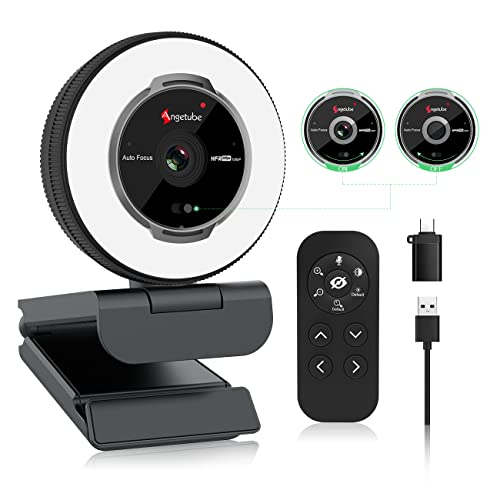
| Angetube Streaming Webcam | 1080p @ 60 FPS | Real-Time Autofocus | 3-Color Ring Light | 360° RF Remote Control |
| EMEET NOVA 4K | 4K @ 30 FPS | PDAF Focus (7.9-118 in) | Auto Backlight Comp | Plug-and-Play / EMEETLINK |
| EMEET S600L | 4K @ 30 FPS / 1080p @ 60 FPS | 0.2s Fast PDAF | 4-Mode Fill Light Dial | Physical Dial & Software |
Reviewing these core parameters ensures you match your camera hardware to your specific digital workflow. Content creators frequently favor fast frame rates and built-in lighting, while corporate professionals lean toward rapid plug-and-play operation. Understanding these distinct advantages helps you choose the perfect optical tool for your digital workspace.
Why You Should Trust Us
Our review team approaches video conferencing hardware with a strict focus on objective data analysis and real-world utility. We systematically examine manufacturer optical specifications, sensor dimensions, autofocus response times, and software compatibility profiles. By comparing performance parameters across varied lighting conditions and focal crops, we deliver balanced recommendations tailored to real office needs.
We do not rely on promotional marketing claims or superficial brand recognition when evaluating hardware. Each featured product is shortlisted based on verifiable hardware capabilities, structural durability, microphone clarity, and firmware stability. Our comparison metrics stay constantly updated to reflect changes in software ecosystems and newly released firmware updates.
Transparency drives our editorial methodology across every category we evaluate. We prioritize devices that offer straightforward plug-and-play operation, broad operating system compatibility, and dependable privacy safeguards. Our goal is to provide honest, clear guidance so you can make informed technology investments with complete confidence.
Final Thoughts
Selecting from the Best HD Webcams with Zoom elevates your remote communication from standard utility to professional polish. For broad versatility and exceptional image quality, the EMEET S600 4K Webcam for Streaming serves as our best overall recommendation. Its large Sony sensor delivers incredible 4K clarity, rapid phase-detection autofocus, and crisp cropping headroom that keeps your picture sharp across diverse focal distances.
If you require an affordable, reliable tool for daily video conferences, the Logitech Brio 101 Full HD 1080p Webcam is our top value pick. This compact camera offers dependable 1080p resolution, automatic lighting correction, an integrated privacy slider, and simple software framing tools via Logi Options+. It provides fantastic everyday functionality without overwhelming you with complex technical setup steps.
For presenters and educators who want immediate framing adjustments without opening software menus, the Angetube Streaming Webcam with Microphone stands out as an exceptional choice. Its 360-degree RF remote control allows you to zoom, mute, and balance brightness from across the room, while its built-in multi-tone ring light illuminates your face cleanly. Meanwhile, users wanting studio-grade illumination can look to the EMEET S600L 4K Webcam for Streaming with Ring or the compact EMEET NOVA 4K Webcam for PC, Ultra 4K HD for balanced visual performance.
Investing in reliable optical hardware ensures your virtual presence matches your professional expertise. Take time to explore our full directory at All Reviews to find additional accessories that enhance your digital workflow. With the right zoom-capable camera on your monitor, every virtual interaction becomes clear, engaging, and effortless.
FAQs
How does digital zoom affect video quality in Best HD Webcams with Zoom in 2026?
Digital zoom functions by cropping into the center portion of the camera image sensor. On native 4K sensors, cropping leaves plenty of pixels intact to deliver full 1080p clarity without noticeable degradation. However, applying digital zoom to a native 1080p sensor reduces overall pixel count, which can introduce softness if cropped past 1.5x.
Can I zoom in during live video calls without opening desktop software?
Yes, cameras equipped with dedicated hardware controls or RF wireless remotes allow instant zoom adjustments on the fly. The Angetube Streaming Webcam with Microphone provides a handheld remote that lets you zoom, pan, and mute without navigating through computer menus. This capability is especially handy when screen sharing during high-stakes presentations.
Why is sensor size crucial when choosing Best HD Webcams with Zoom?
A larger physical sensor captures more ambient light across its surface, creating cleaner images with lower digital grain. When you zoom into an image digitally, any background noise or grain becomes magnified on screen. Larger sensors maintain smooth textures and rich color saturation even under the magnification of a tight digital crop.
What is the difference between phase detection autofocus and standard autofocus?
Standard contrast autofocus determines sharpness by scanning back and forth across the focal plane, which causes noticeable image pulsing. Phase detection autofocus (PDAF) calculates subject distance instantly using dedicated pixels on the sensor. This results in smooth, instant focus locks within fractions of a second as you move around your desk.
Do Best HD Webcams with Zoom require specialized software to operate?
Most modern webcams operate under standard UVC protocols, enabling full plug-and-play functionality across major operating systems without driver installations. While base video works instantly, proprietary utility software unlocks granular adjustments for zoom scaling, exposure balance, and color saturation. You can explore our All Reviews hub for additional software-friendly accessories.
How does an integrated ring light enhance zoom clarity?
Digital zoom amplifies visual grain in underexposed environments, making low-light video look muddy when framed closely. Built-in ring lights cast balanced, diffused illumination directly onto facial features to lower sensor gain and reduce noise. This steady light source keeps your zoomed portrait crisp, bright, and flattering throughout calls.
Can these webcams be mounted on standard camera tripods?
Nearly all premium zoom webcams feature a standard 1/4-inch threaded mounting hole underneath their monitor clip base. This universal threading lets you attach the camera directly to desktop tripods, articulating boom arms, or floor light stands. Versatile mounting makes it simple to achieve perfect eye-level angles anywhere in your room.
Which field of view setting is ideal for single person video calls?
A diagonal field of view between 65 and 73 degrees provides the most flattering framing for a single presenter seated at a desk. This angle frames your head and shoulders naturally while excluding messy room perimeters from the background. Wider angles above 85 degrees are better suited for boardrooms with multiple participants.
Are physical privacy shutters better than software disable toggles?
Physical sliding lens covers offer absolute security because they mechanically block light from entering the optical sensor. Software toggles and indicator lights can occasionally malfunction or be bypassed by unexpected application background processes. A physical shutter guarantees complete privacy whenever you conclude a video meeting.
How do dual omnidirectional microphones improve audio during zoomed calls?
Dual omnidirectional microphone arrays capture sound waves from multiple angles, allowing onboard digital processors to isolate voice patterns. Built-in noise reduction algorithms filter out constant ambient sounds like air conditioners and computer fans. This spatial processing ensures your voice remains clear even if you move away from the desk.








