

Modern kitchen setups are shifting rapidly away from sluggish electric coils and inefficient gas flames toward electromagnetic precision. Choosing the Best Induction Cooktops under $500 allows home cooks and culinary professionals to achieve instant heat control without investing in expensive full-range remodels.
In September 2026, manufacturers have upgraded these portable units with commercial-grade cooling fans, expanded magnetic coils, and fine-grained temperature increments. Whether you want to upgrade your apartment setup or add extra burners to your workspace, exploring our Home & Living collection provides valuable perspective on modern household efficiency.
We evaluated 7 top-tier models from leading brands like Nuwave, duxtop, CHANGBERT to determine which burners deliver true commercial durability and steady low-temperature holding. This comprehensive guide highlights the exact features, wattage allocations, and surface materials you need to evaluate before purchasing.


Power Wattage and Heating Efficiency
Induction cooking operates on electromagnetic principles where energy transfers directly into ferrous cookware rather than warming an intermediate glass surface. Most portable induction units designed for standard North American household outlets draw up to 1800 watts at peak output.
This direct magnetic transfer translates to an impressive energy efficiency rating between 83 percent and 90 percent. Traditional gas stoves convert roughly 30 to 40 percent of their energy into actual cooking heat, losing the remainder to ambient kitchen air.
When evaluating power settings, look for units offering broad wattage increments ranging from 100 or 200 watts on the lowest setting up to the full 1800 watts. This wide dynamic range ensures you can gently melt delicate chocolates without scorching or bring several quarts of water to a rapid rolling boil in record time.
A reliable rule of thumb is to verify that the unit can hold continuous low-wattage operation without cycling on and off aggressively. Inexpensive circuitry often pulses full power intermittently, which can cause delicate sauces to break or thin-bottomed pans to burn.
Temperature Control Granularity and Range
Precise temperature regulation is the primary reason serious culinary enthusiasts choose induction over traditional gas or radiant electric burners. Standard hot plates offer vague low, medium, and high dial settings that fluctuate wildly during extended cooking sessions.
Premium countertop units in this category provide upwards of 90 distinct temperature settings ranging from 50 or 100 degrees Fahrenheit up to 575 degrees Fahrenheit. Increment adjustments in 5-degree steps give you the exact thermal control required for sous-vide holding, candy making, and deep frying.
High-heat capability up to 575 degrees Fahrenheit allows you to achieve a hard sear on cast iron skillets that matches commercial restaurant broilers. Conversely, steady low-temperature holding around 100 degrees Fahrenheit keeps butter melted or custards smooth without requiring a double boiler.
Check whether the cooktop offers dedicated one-touch preset buttons for standard kitchen tasks alongside manual incremental controls. Having immediate access to boil, simmer, and sear profiles saves considerable time during busy meal preparation.
Heating Coil Diameter and Pan Coverage
The physical size of the internal copper magnetic coil determines how evenly heat spreads across the bottom of your cookware. Budget cooktops often house small 4-inch or 5-inch coils beneath an 8-inch glass graphic, creating concentrated hot rings in the center of larger skillets.
Top-performing countertop units feature heavy-duty 8-inch magnetic coils with optimized winding structures. A larger coil provides true edge-to-edge heat transfer for 10-inch and 12-inch frying pans, eliminating frustrating cold perimeter zones.
To assess coil quality before purchasing, examine the manufacturer specifications for internal coil dimensions rather than the painted graphic circle on the glass top. A properly wound copper coil maintains uniform magnetic flux across the entire bottom surface of your pan.
If you frequently cook with large stockpots or wide Dutch ovens, pairing an 8-inch coil with thick-bottomed multi-ply cookware ensures flawless thermal diffusion. You can also explore our reviews in All Reviews to discover other versatile small appliances designed for compact kitchen spaces.
Single Versus Dual Burner Configurations
Choosing between a single portable burner and a double-zone induction cooktop depends on your available counter space and meal complexity. Single burners maximize portability, making them ideal for RV trips, outdoor catering, and tight studio apartments.
Double-zone units provide two independent cooking areas on a single streamlined chassis, allowing you to prepare mains and sides simultaneously. However, standard household 120-volt 15-amp electrical circuits limit total combined power draw to 1800 watts across both burners.
Advanced double cooktops utilize dynamic power sharing technology to allocate wattage intelligently between both zones based on user priority. This allows you to supply 1200 watts to one side for rapid searing while reserving 600 watts on the companion burner for a steady sauce reduction.
If your cooking routine regularly demands multi-course preparation, ensure the dual unit features fully independent digital control panels for each zone. Independent interfaces prevent accidental setting overrides when adjusting cooking timers on individual pots.
Build Quality, Housing Materials, and Weight Capacity
Countertop induction burners experience significant mechanical stress from heavy cookware, accidental impacts, and continuous thermal cycles. Models constructed with commercial-grade stainless steel housings offer superior structural rigidity compared to thin plastic frames.
Premium stainless steel chassis can comfortably support heavy cast iron Dutch ovens and commercial stockpots weighing up to 100 pounds. Plastic enclosures can warp or crack over time when exposed to heavy loads and radiant heat reflecting off large cookware bottoms.
The cooking surface itself should feature heavy-duty, shatter-proof ceramic glass designed to withstand intense thermal shocks. Seamless edge-to-edge glass designs prevent liquid spills and food debris from seeping into internal electrical components.
Commercial certifications such as NSF approval and UL 197 compliance indicate that a unit has undergone rigorous drop testing and durability evaluations. These ratings provide peace of mind that your investment will withstand demanding daily use.
Key Specifications Comparison
Comparing technical specifications across leading induction models helps clarify which burner matches your cooking volume and precision requirements. The table below outlines power ceilings, thermal ranges, and primary strengths across our top shortlisted units.
| Cooktop Model | Peak Power | Temperature Range | Coil & Interface | Key Strength |
|---|---|---|---|---|
| Nuwave Pro Chef | 1800W | 100°F to 575°F (5° steps) | Commercial Ceramic Glass | High-heat searing and pro durability |
| Nuwave PIC Double | 1800W Shared | 50°F to 575°F (5° steps) | Dual 8-inch Zones, IMD Touch | Dynamic watt power management |
| Nuwave Double Pro | 1800W Shared | 50°F to 575°F (5° steps) | Dual Independent Zones | Seamless edge-to-edge glass panel |
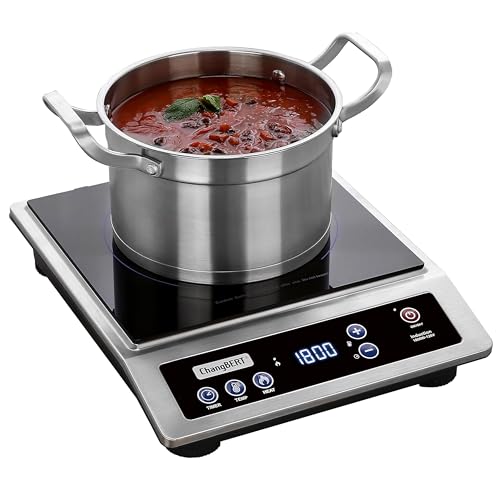
| ChangBERT Induction Cooktop | 1800W | 120°F to 460°F (18 levels) | Large 8-inch Coil, Tactile Keys | NSF certified stainless steel build |
| Nuwave Diamond | 1800W | 100°F to 500°F (5° steps) | Smart Probe Connection | Integrated digital temperature probe |
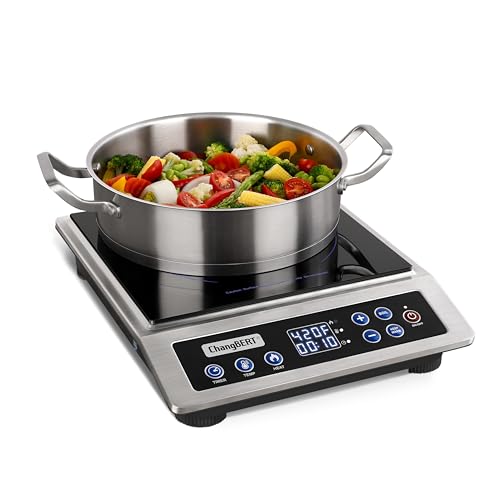
| ChangBERT Enhanced | 1800W | 120°F to 460°F (18 levels) | Large 8-inch Coil, Dual Display | 100 lb capacity and 12-hour timer |
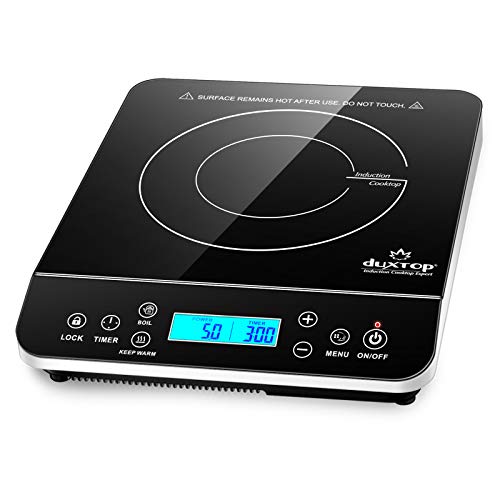
| Duxtop 9600LS | 1800W | 100°F to 460°F (20 levels) | LCD Sensor Touch | Compact design and child safety lock |
Understanding these performance baselines ensures you do not overspend on commercial certifications if you only need a compact burner for casual meal reheating. Conversely, high-volume kitchens benefit tremendously from heavy metal construction and continuous-duty ratings.
Digital Controls, Probes, and Interface Usability
The interface design directly impacts your day-to-day cooking comfort and operational safety. Modern induction cooktops utilize either physical tactile buttons or smooth in-mold decoration touch panels integrated beneath the glass.
Physical tactile buttons provide solid feedback that works effortlessly even when operating the unit with wet hands or silicone kitchen gloves. Seamless capacitive touch panels create a completely flat surface that wipes clean with a single microfiber cloth.
Some advanced induction models include integrated smart digital temperature probes that plug directly into the unit. These probes monitor the internal temperature of meats or liquids in real time, automatically adjusting burner output to maintain your exact target.
Look for displays with high-contrast dual digital screens that show power level, current temperature, and countdown timer simultaneously. Clear visibility from wide viewing angles prevents you from having to lean over hot steam to check cooking status.
Continuous Duty Circuitry and Cooling Systems
Internal thermal management is the secret behind long-lasting induction electronics. The insulated-gate bipolar transistor, or IGBT, generates internal heat that must be continuously dissipated during high-power cooking.
Commercial-grade burners incorporate dual IGBT setups paired with continuous-duty circuitry engineered for non-stop operation. Units with upgraded internal heat sinks and low-noise brushless fans run cooler and prevent premature automatic thermal shutdowns.
Budget cooktops with inadequate cooling often throttle power downward after 15 to 20 minutes of continuous high-heat searing. Choosing a model with dedicated multi-channel airflow ensures stable, unwavering power output throughout long braises and canning sessions.
Low-noise fan designs keep acoustic output minimal, avoiding high-pitched whines that can make cooking in small kitchens unpleasant. Inspecting ventilation grill placements helps ensure the unit maintains proper airflow when placed against kitchen backsplashes.
Cookware Compatibility and Magnetic Requirements
Induction burners require cookware with ferrous magnetic properties to generate heat within the vessel itself. Cast iron, enameled cast iron, and magnetic stainless steel pans work seamlessly across all induction cooktops.
Non-magnetic materials such as pure aluminum, solid copper, and standard glass will not interact with the magnetic coil. You can quickly test any pan in your current collection by placing a simple refrigerator magnet against the bottom surface.
If the magnet sticks firmly, the pan will activate the induction heating mechanism efficiently. Additionally, ensure your cookware features a flat, smooth bottom with a minimum diameter of 5 inches to satisfy built-in pan detection sensors.
Warped pan bases reduce surface contact and can cause high-frequency buzzing or uneven heating patterns. Investing in flat, heavy-gauge multi-clad cookware unlocks the full responsiveness and precision that induction cooking delivers.
Built-in Safety Mechanisms and Auto-Pan Detection
Induction technology is inherently safer than open flame gas burners or red-hot electric coils because the cooktop surface stays comparatively cool. Heat is generated solely inside the pan, significantly reducing accidental burn hazards in active kitchens.
Essential safety features include auto-pan detection that automatically shuts off power within 60 seconds if cookware is removed. Small article detection prevents the unit from heating metal utensils like spoons or forks accidentally left on the glass.
Overheat protection circuits monitor internal temperatures and instantly kill power if a dry pan begins to overheat dangerously. Digital child lock functions prevent unintended setting changes from curious fingers or accidental brush-bys during food prep.
These redundant electronic safety protocols make portable induction burners exceptionally practical for dorm rooms, assisted living apartments, and busy buffet catering setups.
Why You Should Trust Us
Our review methodology centers on deep technical evaluation, manufacturer specification verification, and rigorous feature comparison across the portable appliance sector. We analyze power delivery consistency, thermal range increments, structural materials, and safety certifications across dozens of market contenders.
Rather than relying on superficial marketing claims, we cross-reference internal component designs, including coil dimensions and cooling fan layouts, against commercial standards. This data-driven framework allows us to identify models that offer genuine durability and precise temperature control for long-term culinary satisfaction.
We regularly update our product evaluations as brands iterate on firmware, interface design, and circuit reliability. Our independent recommendations reflect objective performance metrics, ensuring you receive transparent guidance without corporate sponsor bias.
Final Thoughts
Selecting the right induction burner depends on whether you prioritize commercial-grade searing power, dual-pot versatility, or smart probe precision. For home chefs who demand professional culinary control, the Nuwave Pro Chef Induction Cooktop represents our top overall recommendation thanks to its broad 575-degree temperature ceiling and commercial ceramic glass top.
If you require double-burner convenience without exceeding standard household electrical limits, the Nuwave Double Pro Cooktop Induction Countertop delivers outstanding value with intelligent dynamic watt sharing and independent zone controls. For commercial catering and high-volume meal prep, the ChangBERT Induction Cooktop offers rugged stainless steel construction and NSF certification.
Budget-conscious shoppers who still desire precision temperature sensing will appreciate the Nuwave Portable Induction Cooktop Diamond, which includes an integrated digital probe for exacting liquid temperatures. For more kitchen inspiration and appliance comparisons, explore our comprehensive guides in Home & Living to elevate your home cooking experience.
Frequently Asked Questions
What makes Best Induction Cooktops under $500 better than traditional electric hot plates in 2026?
Induction cooktops heat the pan directly through magnetic energy with up to 90 percent efficiency, whereas electric hot plates heat an exposed coil and lose substantial thermal energy to ambient air. Induction provides instant temperature adjustments and stays much cooler on the glass surface for faster, safer cooking.
Can I plug an 1800W induction burner into a standard household outlet?
Yes, portable induction burners operating at 1800 watts are engineered specifically for standard North American 120-volt 15-amp or 20-amp electrical outlets. To prevent circuit breaker tripping, avoid running other high-draw appliances on the exact same electrical circuit while cooking at maximum power.
How do I check if my existing cookware works on an induction cooktop?
You can test your cookware by holding a standard refrigerator magnet against the bottom surface of the pot or pan. If the magnet sticks securely and the bottom is flat with a diameter of at least 5 inches, the pan is fully compatible with induction cooking.
Why do induction cooktops make a buzzing or humming noise while operating?
The subtle buzzing sound is caused by electromagnetic vibrations between the multi-layered metals in clad cookware bases under high magnetic flux. The internal cooling fan also produces a gentle hum to keep the electronics cool, which is completely normal and safe.
What is the benefit of dynamic watt technology on dual induction cooktops?
Dynamic watt technology intelligently balances the total 1800-watt power pool between both burners rather than forcing a strict 50-50 split. This allows you to allocate high power to one burner for boiling or searing while maintaining a gentle, low-wattage simmer on the companion zone.
Can an induction cooktop reach temperatures high enough to sear steak?
Yes, premium models in our review achieve temperatures up to 575 degrees Fahrenheit, which provides intense heat ideal for restaurant-quality searing on cast iron pans. The direct magnetic energy transfer ensures that the pan gets hot rapidly and maintains heat even when cold meat is added.
Are commercial NSF certified induction cooktops safe for home kitchen use?
NSF certified induction burners are entirely safe and exceptionally practical for home use because they meet stringent commercial durability and electrical safety standards. They feature sturdier stainless steel housings, impact-resistant glass, and continuous-duty internal cooling systems designed for heavy workloads.
How do you properly clean and maintain a ceramic glass induction cooktop?
Because the glass cooktop does not reach scorching temperatures, food spills do not bake or burn onto the surface. Simply allow the unit to cool down after cooking, wipe the glass with a damp microfiber cloth, and use a mild glass cleaner or ceramic cooktop paste for greasy residues.
What happens if I turn on an induction burner without a pan on the surface?
Built-in auto-pan detection sensors will recognize that no magnetic load is present and prevent the coil from energizing. The cooktop will display an error code or beep briefly before automatically shutting off within 60 seconds to protect the electronics and conserve energy.
Can I use cast iron skillets on portable induction cooktops without scratching the glass?
You can safely use cast iron on induction cooktops, but you should place the heavy pan down gently rather than sliding it across the surface. Many chefs place a thin silicone baking mat or sheet of parchment paper under the cast iron pan to protect the glass from scratches during cooking.








