

Achieving a deep, mirror-like gloss on automotive clear coats requires the right buffing tools. Using coarse rags or worn shop towels can quickly ruin fresh paint correction with micro-marring and swirl marks. Investing in the Best Microfiber Towels for Polishing ensures your compound, glaze, and wax removal remains completely streak-free.
Automotive finishes have become softer and more delicate across modern vehicle manufacturing. Enthusiasts who consult our Auto & Vehicles detailing guides know that clean buffing cloths preserve paint gloss. This updated September 2026 roundup explores 5 leading options from Meguiar’s, MR.SIGA, USANOOKS to elevate your detailing routine.
Many vehicle owners mistakenly believe all microfiber cloths deliver identical performance across delicate surfaces. Choosing cloths with the correct fiber blend, weave density, and edge construction prevents costly paint damage. This guide outlines everything you need to select reliable towels that maximize your polishing efficiency.



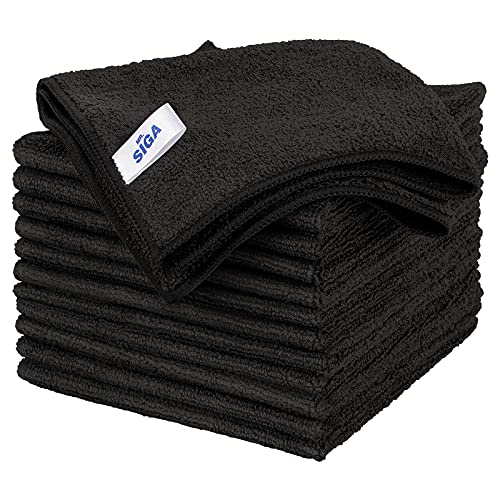
Fabric Blend and Polyester to Polyamide Ratios
The foundation of every quality detailing cloth lies in its synthetic fiber composition. Most automotive cloths combine polyester for structural strength with polyamide for softness and moisture retention. Standard utility rags often use an 85/15 ratio, while dedicated polishing cloths frequently utilize an 80/20 or 70/30 blend.
Polyamide content directly dictates how gentle the cloth feels against soft clear coats. Higher polyamide ratios increase water absorption and create a softer touch during high-friction buffing passes. Cheaper towels containing minimal polyamide feel stiffer and risk inflicting light marring during compound wipe-offs.
Inspect the manufacturer label before touching any cloth to freshly polished paintwork. Premium detailing towels clearly specify their fiber ratio on the packaging or tagless border. Prioritize cloths with at least twenty percent polyamide when working on delicate dark automotive finishes.
Fabric Density and GSM Rating
Fabric weight in microfiber textiles is universally measured in grams per square meter, known as GSM. Towels typically range between 250 GSM for utility cleaning to over 500 GSM for heavy plush drying. For polishing and compound residue removal, an ideal density sits between 300 and 450 GSM.
Lighter cloths below 300 GSM can lack sufficient cushion to trap spent polishing oils effectively. Conversely, excessively heavy cloths above 600 GSM tend to drag across clear coats, making residue removal tiring. Mid-weight options provide the perfect balance between tactile control, residue capture, and effortless surface gliding.
Evaluating GSM helps detailers designate specific towels for distinct steps in the paint correction process. You can check our comprehensive product comparisons to see how fabric weights influence general cleaning tasks. Matching cloth density to your specific detailing step guarantees consistent results without excessive arm fatigue.
| GSM Range | Pile Characteristics | Primary Polishing Use | Clear Coat Safety Level |
|---|---|---|---|
| 250 to 300 GSM | Ultra-short, tight closed loop | Glass cleaning, interior dusting | Moderate (utilize with light pressure) |
| 300 to 380 GSM | Dual-sided, medium plush weave | Compound and polish residue removal | High (ideal for clear coat finishing) |
| 400 to 500 GSM | Deep plush, open fiber structure | Quick detailer buffing, final sealant wipe | Maximum (gentle on soft paints) |
| 500+ GSM | Ultra-dense, heavy plush fleece | Drying passes, spray wax buffing | Maximum (heavy cushion for gloss work) |
Pile Depth and Dual-Sided Construction
Pile depth refers to the exposed length of the split synthetic loops across the cloth face. Short-pile fibers offer higher friction and mechanical bite, making them superb for cutting through sticky residue. Long-pile fibers provide deeper pockets that safely isolate spent abrasives away from the delicate clear coat.
Dual-sided microfiber towels provide both short and long pile textures on a single cloth. Detailers use the short-nap side to level and break down sticky compound films on the first wipe. Flipping the cloth over reveals the plush side to execute a final, swirl-free finishing buff.
Working with single-sided flat weave towels often causes polish oils to smear across the panel. A dual-pile design allows you to clear the bulk of compound residue before completing your final inspection pass. Always fold your cloth to keep clean sections ready as you move between vehicle panels.
Edge Construction and Hemming Quality
The perimeter of a microfiber cloth is where most accidental scratching occurs during aggressive buffing. Traditional towels feature coarse polyester thread overlock stitching that can leave fine micro-scratches on sensitive paint. Higher-end detailing options use ultrasonic edgeless borders, hidden seams, or soft satin ribbon edges.
Edgeless towels are cut cleanly with high-frequency lasers or ultrasonic blades to eliminate stitched borders completely. This construction ensures that every square inch of the towel touching your vehicle is composed solely of soft microfiber. If you use stitched towels, verify that the thread is soft nylon rather than stiff plastic monofilament.
Always conduct a scratch test on a spare CD or test panel before using new cloths on high-gloss paint. Stiff edges or abrasive hem threads will quickly reveal scratches on vulnerable test surfaces. Choosing laser-cut or silk-banded borders eliminates border-induced swirls during heavy correction work.
Fiber Splitting and Grime Trapping Mechanics
High-performance microfiber undergoes a chemical splitting process that creates millions of tiny microscopic hooks. Unsplit microfiber simply pushes dirt and liquid around without capturing particles beneath the surface. Properly split fibers generate a capillary action that pulls polishing lubricants and abraded clear coat particles deep inside.
The microscopic structure traps spent compound dust so it cannot roll against the painted panel during buffing. When fibers lack proper splitting, abrasive residue stays on the outer surface and causes swirl marks. Premium cloths use specialized weaves designed to hold multiple times their dry weight in liquid and spent compound.
You can easily test fiber splitting by running the dry cloth across the palm of your hand. Properly split microfiber will grab gently against microscopic skin ridges rather than sliding like slick polyester. This clinging sensation confirms the fibers possess the necessary microscopic hooks to collect spent polish oils.
Size, Folding Geometry, and Ergonomics
Towel dimensions directly impact your control and working comfort during long detailing sessions. Common sizes range from compact twelve-inch squares up to large sixteen-by-twenty-four-inch detailing blankets. Smaller cloths offer excellent maneuverability around door handles, mirrors, and tight body contours.
Larger towels allow you to utilize the standard eight-sided folding method for maximum efficiency. Folding a sixteen-inch square towel twice creates eight distinct, clean working faces on a single towel. This technique prevents cross-contamination between heavily loaded compound zones and fresh finishing areas.
Avoid using oversized drying towels for targeted polishing jobs because excess fabric will drag across dirty lower panels. Managing towel boundaries prevents you from picking up road grit from tires or rocker moldings. Select a size that fits comfortably in your hand when folded into quadrants.
Absorbency and Residue Release Properties
Polishing compounds and liquid sealants contain synthetic carrier oils that require substantial absorbency to remove cleanly. Standard cotton rags quickly saturate with oils, resulting in hazy smears across the vehicle hood and doors. Quality microfiber cloths rapidly pull these oily carriers away, leaving the true paint condition exposed.
While absorbency is vital, the cloth must also release trapped liquids efficiently during dedicated laundering cycles. Dense fibers that retain oils even after washing will redeposit contaminants on subsequent detailing projects. Premium towels feature quick-drying release layers that shed collected grime readily when washed in warm water.
High absorbency also prevents premature towel saturation when working with spray detailers or panel wipe solvents. Keeping multiple fresh towels on hand ensures you never wipe clear coats with an oil-logged cloth. Switch to a dry towel as soon as you notice residue dragging rather than lifting cleanly.
Durability and Machine Wash Longevity
Automotive detailing demands frequent washing cycles to remove stubborn polishes, waxes, and ceramic sealants. Commercial-grade microfiber towels are engineered with reinforced stitching to withstand hundreds of wash cycles without fraying. Inferior cloths shed lint, lose their pile density, and degrade after just a few laundering sessions.
Washing microfiber requires specific care methods to preserve fiber softness and electrostatic attraction. Never wash detailing towels with household cotton items, as microfiber will attract and lock in cotton lint. Always avoid heat cycles above medium temperatures, because excessive heat melts the delicate synthetic fiber tips.
Dedicated microfiber detergents help dissolve stubborn compound oils without coating fibers in artificial scents or softeners. Maintaining your towels properly guarantees consistent scratch-free performance over years of paint maintenance. Inspect towel edges periodically and downgrade worn cloths to engine bay or wheel cleaning tasks.
Paint Surface Compatibility and Clear Coat Softness
Automotive clear coats vary dramatically in hardness between different vehicle manufacturers and paint systems. Softer finishes found on Japanese vehicles scratch far more easily than hard German ceramic clear coats. Using the wrong towel on soft black paint will immediately generate light hazy marring after polishing.
Harder clear coats tolerate slightly firmer short-pile towels to quickly level thick paste waxes and stubborn compounds. Soft clears demand ultra-plush, high-GSM microfiber to minimize surface friction during product removal passes. Understanding your vehicle paint characteristics prevents you from undoing hours of careful machine polishing.
Always perform a small test spot on an inconspicuous area before wiping down an entire corrected vehicle. This precautionary step confirms that your cloth selection complements the specific clear coat hardness. Adjusting your towel choice to the paint type ensures optimal gloss and flawless optical clarity.
Why You Should Trust Us
Our review team evaluates automotive care products through rigorous specification comparisons and material analysis. We examine fiber splitting standards, fabric weight ratings, border construction techniques, and real-world durability metrics. Our comparisons focus on data-driven metrics to identify detailing products that genuinely protect delicate automotive paint finishes.
We source technical specifications directly from trusted manufacturers across Meguiar’s, MR.SIGA, USANOOKS to ensure complete accuracy. By referencing independent textile testing standards alongside established detailing protocols, we filter out misleading marketing claims. You can explore our Home & Living cleaning standards to see our consistent evaluation criteria.
Our database updates automatically in September 2026 to reflect changes in product availability, formulations, and production runs. We never accept sponsored placements or allow brands to influence our editorial recommendations. Every guide focuses solely on providing objective, actionable advice that helps vehicle owners achieve professional paint correction results.
Final Thoughts
Selecting the Best Microfiber Towels for Polishing transforms your paint correction workflow from frustrating to effortless. High-grade microfiber protects your clear coat from swirl marks while speeding up compound and polish removal. Equipping your garage with specialized towels ensures every vehicle in your fleet maintains a pristine showroom gloss.
For dedicated paint correction and high-gloss buffing passes, Meguiar’s Supreme Shine Microfiber Towels, 6 Pack earns our top recommendation. Its deep dual-sided pile absorbs twice as much compound residue as standard cloths while eliminating micro-swirls on sensitive finishes. The generous dimensions provide ample working surface area to complete multiple vehicle panels with ease.
If you need high-volume utility cloths for general detailing and cleaning, USANOOKS Microfiber Cleaning Cloth Grey delivers exceptional value. Its commercial-grade weave provides strong durability across hundreds of wash cycles without shedding lint or scratching surfaces. For household wiping and delicate surface dusting, MR.SIGA Microfiber Cleaning Cloths provides consistent streak-free results across glass and trim.
When maintaining family haulers like those in our best plug in hybrid 3 row SUV picks for families guide, having ample fresh towels is essential. Always fold your cloths into quadrants and swap to fresh sides frequently to avoid dragging spent residue across panels. Caring for your detailing towels with proper wash techniques will keep them performing reliably season after season.
Frequently Asked Questions
What makes the Best Microfiber Towels for Polishing different from ordinary utility cloths?
Polishing towels feature split microfibers, higher polyamide ratios, and scratch-safe edge construction to protect sensitive automotive clear coats. General utility cloths often use unsplit fibers and stiff border stitching that can cause micro-marring when buffing paint.
What GSM is recommended for car polishing and wax removal in 2026?
A density between 300 and 450 GSM is ideal for leveling compound residue and buffing out finishing waxes. This weight provides enough cushion to collect spent oils without creating excessive drag across the painted surface.
How do I wash microfiber polishing towels to prevent scratching?
Wash detailing cloths in warm water using a dedicated liquid microfiber detergent free from dyes and perfumes. Avoid washing them with cotton towels to prevent lint transfer, and tumble dry on low heat or hang them to air dry.
Can I use fabric softener when laundering detailing towels?
Never use fabric softeners or dryer sheets when cleaning microfiber buffing cloths. Softeners coat the microscopic fibers with a waxy chemical layer that eliminates absorbency and causes severe streaking on automotive paint.
What is the benefit of edgeless microfiber towels during paint polishing?
Edgeless towels eliminate traditional stitched borders that can concentrate pressure and scratch soft clear coats. Laser-cut edges ensure that every contact point between the towel and vehicle remains ultra-soft and completely swirl-free.
How many microfiber towels are needed to polish a standard vehicle?
A full two-stage paint correction typically requires six to ten clean microfiber towels for compound and polish wipe-offs. Using fresh towels prevents spent abrasive residue from loading up and causing secondary micro-scratches during final buffing.
Why is an 80/20 or 70/30 polyester to polyamide ratio preferred?
Polyamide adds essential softness, water retention, and elasticity to the rigid polyester structural framework. Higher polyamide ratios create a noticeably softer towel that glides effortlessly across sensitive automotive paintwork without snagging.
Can I use the same microfiber towel for interior cleaning and paint buffing?
It is best to separate your towels by color code to prevent cross-contamination between harsh chemicals and delicate exterior paint. Dedicated interior cloths can pick up coarse sand and vinyl protectants that should never touch freshly polished clear coat.
How do I know when a microfiber towel has reached the end of its lifespan?
Towels that feel stiff, shed lint, or feature frayed edges should be retired from exterior paint correction duties immediately. Downgrade worn cloths to dirty jobs like cleaning wheel barrels, exhaust tips, or greasy engine compartment trim.
Does towel color matter when performing automotive paint correction in 2026?
Lighter towel colors like yellow, grey, and white make it much easier to spot trapped dirt and residue before wiping. Color coding also helps you assign specific cloths to compounding, polishing, and final wax removal stages.








