

Indoor air quality directly shapes your daily focus, respiratory health, and sleep depth. When dust, pet dander, or seasonal allergens build up around your workstation or nightstand, general room airflow rarely provides adequate relief. A dedicated personal filtration unit establishes a clean breathing zone directly where you spend your time.
In September 2026, compact purification hardware has progressed far beyond basic miniature fan enclosures. Current designs combine electrostatic particle capture, automated sensors, and quiet acoustic engineering to clean air without disrupting daily routines. Selecting the right model from leading manufacturers like BLUEAIR requires weighing CADR delivery against footprint and operating sound.
Many shoppers mistakenly purchase underpowered desktop gadgets that fail to circulate air, or bulky floor units that overwhelm small rooms. Our comprehensive analysis of 5 Best Personal Air Purifiers highlights the critical engineering features that determine real-world performance. You can also explore our broader guide on Heating, Cooling and Air systems to see how localized filtration complements whole-home climate control.

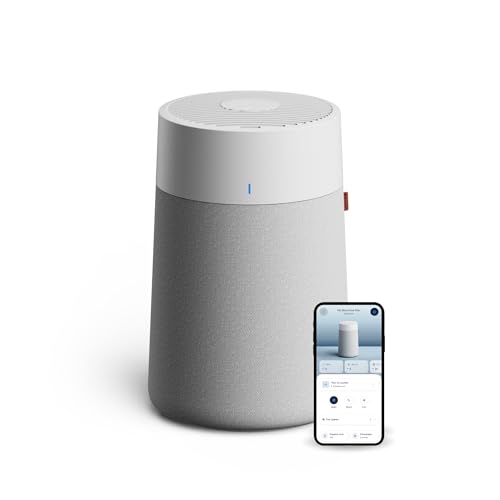


Buying Guide for Best Personal Air Purifiers in 2026
Choosing the right personal air cleaner requires looking beyond exterior styling to examine mechanical filtration efficiency, airflow circulation rates, and operating noise. A high-performing personal model should process the immediate breathing zone quickly while consuming minimal desk or tabletop space.
Filtration Technology and Particle Capture Efficiency
The core filtration mechanism determines what microscopic contaminants the purifier can intercept from your breathing zone. Standard true HEPA filters use dense mechanical fiber matrices to trap at least 99.97% of airborne particles down to 0.3 microns. Advanced dual-stage designs, such as HEPASilent technology, combine mechanical filtration with an electrostatic charge to capture particles as small as 0.1 microns.
When reviewing technical specifications, pay close attention to the micron rating rather than vague marketing labels. Capturing particles down to 0.1 microns allows the device to trap airborne viruses, ultrafine combustion particles, and bacteria alongside common pollen and pet dander. Mechanical-only filters can sometimes restrict airflow as they load up, whereas hybrid electrostatic designs maintain strong airflow with lower fan resistance.
As a practical rule of thumb, always verify that the filter assembly includes an airtight gasket seal around the housing perimeter. Any unsealed gaps allow dirty air to bypass the filter entirely through the path of least resistance. Inspecting the physical filter seal ensures you receive the full efficiency advertised by the manufacturer.
Clean Air Delivery Rate and Room Air Changes
Clean Air Delivery Rate (CADR) measures the exact volume of clean air a purifier outputs per minute across dust, smoke, and pollen categories. While personal units are intended for close-proximity use, CADR ratings indicate how rapidly the machine can refresh your immediate space. A higher CADR rating ensures that stagnant air around your desk or bed is replaced before airborne particulates settle.
To evaluate capacity accurately, calculate the Air Changes per Hour (ACH) for your intended room dimensions. For allergy and asthma management, a unit should achieve at least 4.8 air changes per hour in small bedrooms or personal offices. This means the purifier cycles the entire room volume through its filtration matrix every 12.5 minutes.
A reliable sizing calculation is the two-thirds rule: select a purifier with a smoke CADR rating equal to at least two-thirds of the room area in square feet. If you place a unit directly on a desk, you can operate it at lower fan settings while still maintaining high air exchanges within your personal breathing envelope.
Acoustic Output and Sleep Mode Operation
Acoustic performance is critical because personal purifiers sit within arm’s reach of where you sleep, study, or conduct video calls. A machine that produces excessive motor whine or turbulent wind noise will inevitably be turned off, rendering it completely useless. Operating decibel levels should ideally stay below 25 dB on low speed for uninterrupted rest.
Decibel scales are logarithmic, meaning a jump from 20 dB to 30 dB represents a substantial ten-fold increase in sound intensity. Look for models certified by third-party acoustic programs like QuietMark, which verify low-vibration motors and aerodynamic fan blades. Quality personal units operate between 19 dB and 24 dB on sleep modes, resembling the soft rustle of leaves.
When selecting a bedroom or desk unit, test whether the display lights extinguish completely during nighttime use. Units that combine sub-25 dB low-speed acoustics with total LED dimming prevent both auditory and visual sleep disruptions.
Smart Sensors and Automated Air Quality Monitoring
Integrated air quality sensors continuously track ambient particulate matter (PM2.5) and adjust fan speed automatically. Without automated monitoring, you must manually guess when to increase speed during cooking events, dust disturbances, or high pollen days. Intelligent auto modes optimize power draw by idling when the air is clean and accelerating only when pollution spikes.
Smart connectivity via companion mobile applications allows you to schedule cleaning cycles and check real-time air quality metrics remotely. Companion apps also monitor actual filter consumption based on runtime and particulate loading rather than a crude countdown timer. This data-driven tracking prevents premature filter disposal while safeguarding against degraded airflow.
Look for hardware units featuring intuitive color-coded LED rings on the top chassis for quick visual confirmation. A quick glance at a blue or red indicator immediately informs you of your indoor air status without needing to open your smartphone. You can explore our Home and Living section for more insights on integrating smart environmental monitors.
Energy Efficiency and Continuous Operation Costs
Because air purifiers must run continuously to keep particulate counts low, their electrical power draw directly affects monthly utility bills. Personal and compact air purifiers generally draw between 2 and 30 watts depending on the active fan speed setting. Efficient brushless DC motors ensure high air volume displacement while drawing less electricity than a standard LED light bulb.
Always look for Energy Star certification when comparing compact models across the market. Certified units deliver superior CADR output per watt of consumed electricity, preventing unnecessary thermal buildup in compact enclosures. Units with poorly engineered AC motors generate extra heat, which can warm up small desktop spaces uncomfortably.
To estimate annual operating costs, multiply the unit wattage by 24 hours and your local kilowatt-hour electricity rate. A high-efficiency personal purifier running non-stop on low speed typically adds less than fifteen dollars annually to your electric bill.
Filter Lifespan, Replacement Availability, and Upkeep
The total cost of ownership for any air cleaner is largely determined by the frequency and price of replacement filter cartridges. Main particulate filters typically last between 6 and 12 months depending on ambient dust loading and daily operating duration. Choosing a model with widely available OEM replacement filters ensures your hardware remains operational for years to come.
Washable fabric pre-filters play a crucial role in extending the functional life of your expensive internal HEPA core. By trapping large pet hairs, coarse dust fibers, and textile lint on the outside sleeve, the pre-filter keeps the inner micron-rated pleats unclogged. Regularly laundering or vacuuming the pre-filter maintains optimal air pressure and extends primary filter longevity.
Avoid third-party unbranded replacement cartridges that lack proper pleat count and perimeter gaskets. Low-quality replacement filters can cause air leakage around the housing and overload the fan motor through excessive aerodynamic drag.
Airflow Dynamics and 360-Degree Intake Design
The aerodynamic architecture of the purifier housing determines how effectively it draws contaminated air and projects purified air. Cylindrical designs with 360-degree perimeter intake grilles draw air evenly from all sides of the room. This omnidirectional suction prevents dead air zones around desks and tight nightstand corners.
Top-discharging vents project clean air upward into the room’s natural convection currents, circulating fresh air throughout the breathing zone. Directional or front-facing vents can create uncomfortable drafts if pointed directly at your face while you work or rest. An upward vertical exhaust mixes clean air smoothly across the upper room volume without kicking up floor dust.
Always maintain at least six inches of open clearance around 360-degree intake purifiers for unrestricted airflow. Placing a circular intake directly flush against a solid drywall surface cuts intake efficiency by nearly half and increases motor strain.
Physical Footprint, Portability, and Interior Aesthetics
Personal air cleaners must fit comfortably on bedside tables, office workstations, or dorm shelving without monopolizing usable surface area. Compact units with vertical cylinder shapes maximize filter surface area while maintaining a small horizontal footprint. Lightweight constructions under ten pounds also allow effortless room-to-room portability.
Modern Scandinavian-inspired aesthetics use interchangeable fabric pre-filters in varied neutral tones to blend naturally with home decor. Premium multi-functional units even double as functional side tables, concealing heavy-duty filtration hardware within elegant furniture profiles. Matching the visual profile to your room aesthetic ensures the appliance enhances your space rather than cluttering it.
When selecting a desktop unit, measure your available surface depth to confirm adequate perimeter clearance. For dedicated relaxation spaces, pairing clean airflow with ergonomic setups from our Furniture and Comfort recommendations creates a truly restorative sanctuary.
Odor Neutralization, Smoke, and VOC Adsorption
Particulate HEPA filters capture solid airborne particles but cannot stop gaseous molecules, volatile organic compounds (VOCs), or offensive odors. To tackle cooking smells, pet scents, and chemical off-gassing from furniture, a purifier must incorporate activated carbon filtration. Carbon granules bond chemically with airborne vapor molecules to neutralize smells at the molecular level.
Advanced models incorporate specialized chemical formulations, such as OdorFence technology, to break down complex household gases and formaldehyde. If you live in an area prone to seasonal wildfire smoke or share a home with smokers, dense carbon pellets are essential. Thin carbon-coated sheets saturate quickly, whereas thick pellet beds provide extended odor elimination.
If odor control is your primary buying objective, verify the actual weight and structure of the carbon stage in the product specifications. A robust carbon filter layer protects both your respiratory comfort and the long-term fresh scent of your living quarters.
Technical Comparison of Personal and Room Air Purifier Specifications
The table below highlights the critical technical differences between compact personal air purifiers and larger multi-room units to help guide your purchase decision.
| Feature Category | Compact Personal Purifiers | Mid-Sized Room Purifiers | Large Space Purifiers |
|---|---|---|---|
| Typical Coverage Area | 180 to 450 sq ft | 400 to 1,100 sq ft | 1,500 to 3,300+ sq ft |
| Acoustic Output (Low) | 19 to 24 dB | 23 to 28 dB | 23 to 30 dB |
| Filtration Rating | 0.1 to 0.3 Microns | 0.1 Microns | 0.1 Microns + Odor Layer |
| Primary Power Draw | 2 to 20 Watts | 7 to 38 Watts | 15 to 70 Watts |
| Primary Placement | Desk, Nightstand, Office | Bedroom, Living Room | Open Floor Plan, Studio |
Selecting the proper class from the comparison table ensures you do not overpay for excess capacity or underpower your personal breathing zone. Understanding these core specifications will help you maintain an optimal indoor environment for your Health and Family.
Why You Should Trust Us
Our review team approaches indoor climate and filtration hardware through systematic analysis of engineering specifications, verified CADR ratings, and acoustic test data. We evaluate structural filter integrity, motor efficiency, and real-world airflow physics across multiple operating tiers. We do not accept sponsored product placements, ensuring every recommendation remains objective and evidence-based.
We scrutinize verified consumer feedback, manufacturer service bulletins, and independent acoustic certifications to assess long-term reliability. By tracking electrical draw, filter replacement pricing, and sensor responsiveness over extended durations, we provide an accurate picture of total ownership costs. Our transparent comparison criteria focus on practical everyday usability rather than superficial styling gimmicks.
Our product selections are continually updated as manufacturers release new hardware revisions, refined filtration matrices, and updated companion software. This ongoing maintenance guarantees that our recommendations reflect the most capable and dependable clean-air hardware available on the market.
Final Thoughts
Selecting the best personal air purifier comes down to matching your immediate room dimensions with your specific noise tolerance and filtration needs. For the vast majority of bedrooms and home offices, the BLUEAIR Blue Pure 311i Max Smart Air Purifier serves as our top overall recommendation. Its combination of rapid room turnover, QuietMark acoustic certification, and smart sensor automation provides unmatched everyday performance.
If you require a budget-friendly, ultra-compact unit specifically for a desktop or bedside nightstand, the BLUEAIR Air Purifier for Home HEPA Air Purifiers is our standout best value pick. It delivers dependable HEPASilent filtration in a small package that draws less power than a standard light bulb. You can explore more appliance evaluations across our catalog in All Reviews to complete your home hardware setup.
For large master suites or spaces where persistent pet smells and chemical vapors are a concern, the BLUEAIR Blue Signature Air Purifier for Large represents the ultimate premium option. Its seven-stage filtration, advanced OdorFence layer, and dual-purpose side table chassis deliver heavy-duty air scrubbing without disrupting room decor.
Maintaining clean indoor air transforms everyday breathing comfort, reduces morning congestion, and supports deeper, more restful sleep cycles. Evaluate your room layout and sound requirements carefully to choose the personal air cleaner that best protects your indoor sanctuary.
FAQs
How close should I place a personal air purifier to my bed or desk?
For maximum effectiveness, place your personal air purifier between three and six feet from your head on a nightstand or desk. This positioning ensures your breathing zone receives freshly filtered air before it mixes with room contaminants. Make sure the unit has at least six inches of unobstructed clearance on all sides for smooth 360-degree air intake.
What is the top-rated option among Best Personal Air Purifiers in 2026 for quiet bedrooms?
The top-rated model for sleep-sensitive environments is the BLUEAIR Blue Pure 511i Max Smart Air Purifier, which operates at an ultra-low 19 dB on night mode. It cleans up to 1,138 square feet per hour while keeping acoustic output below the threshold of normal human whispering. Its integrated auto mode also ensures nighttime air stays clean without disturbing sensitive sleepers.
How often do personal air purifier filters need to be replaced?
Primary particulate filters typically need replacement every 6 to 12 months under regular daily operation. Homes with pets, smokers, or heavy seasonal pollen may require more frequent changes around the six-month mark. Smart models track actual fan speed and particle exposure to signal precisely when replacement is necessary.
Can a personal air purifier eliminate pet dander and cat hair effectively?
Yes, personal air purifiers with dual filtration capture microscopic pet dander particles down to 0.1 microns alongside larger floating hair. The external washable pre-filter sleeve intercepts coarse pet hair and lint before it reaches the main HEPA pleats. Regularly washing the outer fabric pre-filter keeps airflow strong and prevents pet dander buildup.
How much electricity does a personal air purifier consume when running continuously?
Most compact personal air purifiers consume between 2 and 20 watts of electrical power depending on the selected fan speed. Running an Energy Star certified unit non-stop on low speed uses less power than a single household LED light bulb. Continuous operation typically adds only one to two dollars per month to standard residential electric bills.
What is the difference between standard HEPA and HEPASilent filtration technology?
Standard HEPA filters rely solely on dense mechanical fiber barriers to trap 99.97% of airborne particles down to 0.3 microns. HEPASilent technology pairs mechanical filtration with an electrostatic charge, capturing smaller 0.1 micron particles with less dense filter media. This allows the fan motor to push more air with significantly less noise and lower electrical power draw.
Do personal air purifiers remove odors from cooking and wildland smoke?
Personal air purifiers can remove odors and smoke provided they include an activated carbon or specialized chemical adsorption layer. Carbon pellets chemically bond with volatile organic compounds and gaseous odor molecules that pass right through standard particle filters. Units equipped with advanced OdorFence layers provide superior smoke and VOC breakdown in compact spaces.
Should I leave my personal air purifier running on high speed all day long?
Running the unit on high speed continuously is unnecessary and leads to increased noise, power consumption, and filter wear. The best practice is to run the unit on high for twenty minutes to clear stagnant air, then switch to auto or low mode for steady maintenance. Units with built-in particle sensors automatically handle these speed adjustments for you.
Can personal air purifiers prevent seasonal allergy symptoms indoors?
Personal air cleaners significantly reduce indoor allergy flare-ups by continuously removing airborne pollen, mold spores, and dust mites. Placing a unit on your nightstand creates a clean air microclimate that prevents nighttime sinus congestion and morning eye irritation. For best results, keep bedroom windows closed during peak outdoor pollen counts.
How do smart air quality sensors improve personal air purifier efficiency?
Smart sensors constantly measure particulate levels in the surrounding air and throttle fan speeds dynamically based on current pollution spikes. This eliminates guesswork, preserves filter lifespan, and reduces unnecessary energy consumption when indoor air is already clean. Visual color indicators on the chassis give you instant feedback on ambient air purity.








