

Central cooling accounts for the largest portion of residential energy use during the summer months. Operating a high-capacity compressor with a standard mechanical dial or a rigid timer often produces uneven indoor temperatures and wasted power.
Modern climate controls solve this problem by incorporating adaptive scheduling, smartphone connectivity, and smart occupancy sensing. Our breakdown of the 3 Best Smart Thermostats for Central Air Conditioning in September 2026 analyzes how leading brands like Sensi, Honeywell Home, ecobee perform with modern central cooling equipment.
Whether your goal is to eliminate hot spots in upstairs bedrooms or add hands-free voice controls, selecting the right controller prevents costly installation headaches. You can also explore our guide on heating, cooling & air equipment to see how smart hardware integrates with whole-house climate systems.


How to Choose the Best Smart Thermostats for Central Air Conditioning
C-Wire Requirements and Continuous Power Delivery
Connected climate controllers require steady low-voltage electrical current to maintain continuous wireless connections and illuminate digital displays. This dedicated power path is supplied by the common wire, universally known as the C-wire, which delivers 24-volt alternating current directly from your central air handler or furnace control board.
Older homes wired for simple mechanical thermostats frequently lack this fifth wire in the cable bundle. Some smart models bypass this issue through power-stealing methods or internal batteries, while other high-end options package dedicated power extender modules directly in the box.
Always remove your existing wall plate to count the individual conductors before purchasing replacement hardware. If your wall opening only contains four wires labeled R, G, Y, and W, prioritize devices that bundle power adapters to avoid pulling fresh cabling through finished drywall.
Multi-Stage Cooling and Heat Pump Compatibility
Basic central air systems operate in a binary on-or-off single stage, but higher-efficiency central units utilize two stages or variable-speed compressors. Multi-stage cooling runs at a lower, quieter speed during moderate afternoons and activates maximum output only during intense heat waves.
If your central cooling system uses two-stage cooling with Y1 and Y2 terminals, your smart controller must provide corresponding connection points. Attaching an advanced multi-stage cooling unit to a basic single-stage controller forces your equipment to run at full power constantly, negating your efficiency gains.
Homeowners with heat pump systems must also confirm support for emergency auxiliary heating and reversing valves. Matching terminal capabilities to your specific equipment ensures seamless switching between active cooling, standard heating, and automated defrost cycles.
Remote Room Sensors for Balanced Air Distribution
Conventional wall controllers measure ambient air temperature exclusively in the hallway or central corridor where they are mounted. This single reference point often leaves occupied upstairs bedrooms uncomfortably warm while main-level living rooms become excessively cold.
Wireless remote sensors resolve this issue by tracking climate metrics across multiple rooms simultaneously. The central system averages data across these distinct spaces or prioritizes specific rooms based on custom daytime and nighttime schedules.
When evaluating remote sensor options, examine their wireless transmission range and battery longevity. Positioning auxiliary sensors away from direct sunlight, exterior windows, and supply vents guarantees the most accurate temperature management for your central cooling.
Smart Home Ecosystem Integration and Voice Assistants
Connecting your central air conditioning to an established smart home ecosystem simplifies daily temperature adjustments. Leading platforms let you change setpoints, switch system modes, or check indoor humidity using simple voice commands.
Check for native integration with platforms such as Amazon Alexa, Apple HomeKit, Google Home, or Samsung SmartThings. Certain premium thermostats even incorporate dedicated speaker hardware and microphone arrays directly into the wall unit for direct voice interaction.
Ecosystem compatibility also lets you construct automated routines that synchronize cooling with motorized window blinds or ceiling fans. Pairing your central cooling controls with complementary home & living upgrades helps reduce indoor heat loads before your central compressor turns on.
Scheduling Flexibility, Geofencing, and Occupancy Detection
Traditional seven-day programmable schedules let you define separate cooling targets for weekdays and weekends. However, fixed schedules struggle to adapt when your daily routine changes due to irregular work hours, school holidays, or spontaneous travel.
Modern controllers incorporate smartphone geofencing that automatically sets your cooling into an energy-saving setback mode whenever you leave a designated perimeter. Built-in proximity sensors and radar hardware also detect physical room presence to prevent unnecessary cooling in vacant rooms.
Look for hardware that combines occupancy detection with intelligent pre-cooling algorithms. These algorithms evaluate outdoor heat and indoor humidity patterns to cool your home to the exact target temperature right as you arrive.
Energy Star Certification and Utility Rebate Programs
Certified climate controllers undergo rigorous third-party testing to prove meaningful reductions in annual energy consumption. Certified models maintain narrow temperature swings and prevent short-cycling that can strain high-voltage central air compressor units.
Regional electric utility providers frequently offer direct cash rebates or monthly bill credits when you register an Energy Star certified device. These financial incentives significantly offset the upfront purchase price of premium connected controllers.
Many utility programs also feature voluntary demand-response events that make minor, automated temperature adjustments during severe power grid strain. Check your local energy provider portal before purchasing to confirm which specific hardware models qualify for immediate savings.
Display Visibility, Touchscreen Navigation, and Wall Footprint
The physical interface on your wall dictates how easily family members and guests can adjust temperatures manually. Bright full-color touchscreens present local weather forecasts, indoor humidity percentages, and active cooling stages in a readable format.
Removing an old rectangular thermostat often exposes unpainted drywall patches, old anchor holes, or faded paint marks. Choosing a unit that includes a matching backplate trim kit eliminates the need for patching and repainting your wall during installation.
Consider screen customization if you plan to install your device in a prominent living area. Models offering selectable background color schemes or automatic proximity dimming integrate smoothly with interior home decor without producing annoying nighttime glare.
Indoor Air Quality Monitoring and Maintenance Reminders
Central air systems circulate high volumes of air through your return and supply ductwork continuously. When filters become clogged with dust and debris, restricted airflow places heavy strain on the blower fan and reduces overall cooling performance.
Smart controllers track true fan runtime hours rather than relying on arbitrary calendar estimates to trigger filter change alerts. Prompt filter maintenance protects your central air evaporator coils from freezing up during hot summer weather.
Top-tier models take air management further with integrated air quality sensors that monitor volatile organic compounds and particulate levels. These sensors notify you when indoor pollutants rise, prompting the system to circulate fresh air through your ventilation filters.
Local Network Reliability and Data Privacy Protections
Stable wireless communication ensures that programmed setbacks, weather adjustments, and remote app commands execute without interruption. Dual-band Wi-Fi support across 2.4 GHz and 5 GHz bands provides flexible connection options on modern home mesh networks.
Privacy policies differ significantly between hardware manufacturers. Reputable smart thermostat brands maintain clear customer privacy standards, ensuring that your daily occupancy trends and temperature preferences are never sold to external marketing brokers.
Make sure the hardware stores your active schedule locally on internal flash memory. This local memory ensures that your central air conditioning continues operating normally even if your home internet router experiences an unexpected outage.
| Feature Category | Entry-Level Controls | Mid-Range Controllers | Premium Smart Systems |
|---|---|---|---|
| Power Requirements | Battery or C-Wire Required | C-Wire Required (Adapter Sold Separately) | C-Wire Adapter Kit Included |
| Cooling Support | Single-Stage Only | Up to 2-Stage Cooling | Multi-Stage and Variable-Speed |
| Sensor Support | Onboard Sensor Only | Optional Add-On Sensors | Multi-Room Smart Sensors Included |
| Smart Home Links | Basic Alexa or Google Support | Alexa and Google Integration | Full Siri, Alexa, and HomeKit Integration |
| Air Quality Sensing | Basic Filter Timer | Runtime-Based Filter Alerts | Integrated VOC and Particle Sensors |
Why You Should Trust Us
Our product evaluations rely on rigorous analysis of technical specifications, low-voltage wiring standards, and verified hardware performance. We examine terminal compatibility, transformer load thresholds, wireless stability, and energy management features across the climate control market.
We cross-reference manufacturer engineering schematics with certified efficiency metrics to confirm real-world energy-saving claims. Our recommendations prioritize products with transparent privacy terms, intuitive companion software, durable component design, and broad HVAC system support.
To keep our buying advice accurate as software versions and hardware models evolve, we update our comparisons regularly. You can browse our complete collection of home system guides across all reviews to find objective insights for your home improvement projects.
Final Thoughts
Installing an intelligent controller for your central air conditioning is an effective way to lower energy costs while keeping your living spaces comfortable. Selecting a unit that fits your wiring layout and lifestyle ensures reliable climate management through every heat wave.
For homeowners who want comprehensive room-by-room balance and advanced smart home features, we recommend the ecobee Smart Thermostat Premium – WiFi as our top overall choice. Its included remote room sensor addresses uneven temperatures across different floors, while built-in air quality monitoring and a power extender kit provide complete climate coverage.
If you prefer an affordable, straightforward upgrade that installs without rewiring your walls, the Sensi Smart Thermostat, Wi-Fi, DIY, Alexa is our top value pick. It keeps familiar physical push buttons, covers the footprint of older thermostats, and operates without a dedicated C-wire in most cooling installations.
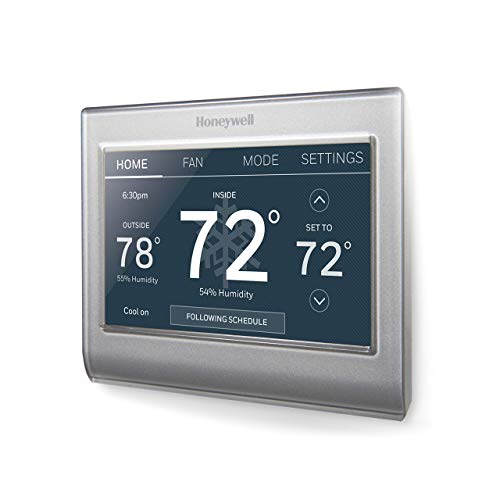
Homeowners who value visual customization and touchscreen convenience will appreciate the Honeywell Home RTH9585WF Wi-Fi Smart Color as our favorite pick for aesthetic flexibility. Its customizable full-color screen blends with your interior paint while providing dependable 7-day scheduling and easy local control.
Frequently Asked Questions
How do Best Smart Thermostats for Central Air Conditioning lower electric bills in 2026?
Smart controllers reduce cooling expenses by eliminating unnecessary compressor runtime when your home is unoccupied. Features like geofencing, algorithmic pre-cooling, and precision scheduling prevent your central air conditioner from cooling an empty house during peak utility rate windows.
Can I install a smart thermostat for central air without a C-wire?
Yes, several smart thermostats function without a dedicated C-wire by using internal battery power or bundling a power adapter module. Units with power extender kits use your existing four wires to supply continuous low-voltage current directly from your air handler control board.
What is the difference between single-stage and multi-stage cooling on a thermostat?
Single-stage cooling operates the compressor at maximum capacity whenever active, whereas multi-stage systems run at lower speeds during mild weather. A multi-stage compatible thermostat controls both stages independently to optimize indoor humidity removal and reduce electricity consumption.
Do remote temperature sensors help balance hot rooms in two-story homes?
Remote sensors measure temperatures in problem areas like upstairs bedrooms rather than relying on a central hallway reading. The thermostat adjusts central cooling cycles based on readings from occupied spaces, preventing upper floors from overheating.
Will my central air conditioner continue cooling if home Wi-Fi disconnects?
Yes, smart thermostats retain your active temperature targets and schedules in local memory during internet outages. You can still adjust temperatures manually at the wall unit, though remote smartphone controls will be temporarily unavailable until your network reconnects.
How does geofencing automate central cooling savings?
Geofencing tracks the location of authorized household smartphones using a virtual perimeter around your residence. When family members leave the perimeter, the controller shifts into an eco setback mode, then restores comfortable temperatures before anyone walks through the door.
What wiring checks should I perform before purchasing a new central AC thermostat?
Turn off power at the circuit breaker, remove your existing wall cover, and photograph the labeled terminal wires. Confirm whether you have dedicated R, C, Y, G, and W wires to determine if your setup requires a power extender adapter.
Can smart thermostats detect when central air filters need replacement?
Modern smart models monitor cumulative blower fan runtime hours to calculate filter clogging accurately. This runtime tracking provides timely maintenance alerts that prevent dirty filters from restricting airflow and causing evaporator coil freeze-ups.
How do utility company demand-response programs work with smart thermostats?
Demand-response programs reward homeowners who allow their local electric utility to adjust cooling setpoints slightly during extreme summer grid demand. Enrolling an eligible smart thermostat earns bill credits while helping prevent regional brownouts.
Which smart home ecosystems integrate best with central air conditioning controls?
Most smart thermostats support Amazon Alexa and Google Home, while premium units add native Apple HomeKit and SmartThings compatibility. Reviewing your existing home & living devices helps you select a thermostat that fits smoothly into your current automation setup.








