Traditional wire-coiled toaster ovens take several minutes to warm up and often create frustrating cold pockets across your food. Modern quartz heating elements solve this issue by radiating instant infrared heat, cutting your meal preparation time while delivering crisp, uniform crusts on everything from bagels to personal pizzas.
For September 2026, our team evaluated 3 leading countertop appliances from top brands like Breville, Panasonic, Elite Gourmet to spotlight the models that balance rapid thermal response with long-term reliability. We analyzed spatial footprints, interior cavity construction, and thermal regulation to help everyday home cooks make confident kitchen upgrades.
Choosing the right quartz model saves valuable counter space while eliminating the need to fire up a standard energy-hungry kitchen range. You can explore more appliance evaluations across our home and kitchen appliances catalog before selecting your next countertop workhorse.

Selecting an appliance with rapid quartz technology requires looking beyond exterior aesthetics and simple wattage numbers. You need to consider element positioning, internal chamber volume, safety controls, and thermal management to achieve flawless culinary results every morning.
Heating Element Technology and Infrared Distribution
Quartz heating tubes operate by enclosing a nickel-chromium resistance wire inside high-purity silica glass tubes. This specific arrangement permits the element to glow red-hot within seconds, generating near-instant radiant infrared heat. Unlike traditional calrod elements that require extended preheating cycles, quartz tubes transfer energy directly to food surfaces with remarkable speed.
The distribution of these elements across the top and bottom of the chamber dictates how evenly your food cooks. High-end countertop units pair upper quartz tubes with lower ceramic elements or dual quartz arrays to balance surface browning against core heating. When heat penetrates food evenly, you eliminate the common problem of charred toppings over raw pastry dough.
Always inspect whether the quartz tubes feature protective metal guards or deflectors. Exposed glass tubes face potential impact damage from heavy bakeware or dripping marinades during active cooking. A sturdy stainless guard shields the fragile quartz sheath while allowing radiant infrared rays to pass cleanly through to your meal.
Wattage and Heat-Up Velocity
Operating wattage directly dictates how quickly a quartz oven reaches target baking temperatures. Compact countertop appliances generally draw between 800 and 1800 watts on standard domestic electrical circuits. Higher wattage ratings shorten preheating cycles significantly, which saves valuable time when preparing quick weekday breakfasts.
High wattage alone does not guarantee superior cooking performance if the internal chamber lacks proper thermal management. An 1800-watt machine produces rapid searing power, but it requires careful thermal sensors to avoid scorching delicate bread crusts. Conversely, lower-wattage units drawing around 800 watts provide gentle, steady heat suitable for smaller dorms, recreational vehicles, and basic toasting tasks.
Consider your kitchen electrical setup before investing in a high-draw appliance. Running an 1800-watt countertop oven on the same shared circuit as a microwave or coffee maker can trip safety breakers. Dedicated kitchen outlets deliver consistent voltage, ensuring your quartz elements radiate at their maximum intended output.
Cavity Capacity and Usable Interior Dimensions
Interior capacity determines both what bakeware you can insert and how much counter footprint the unit commands. Manufacturers typically express internal volume in slice count or cubic dimensions, ranging from compact four-slice models to six-slice units. You must verify internal depth and height rather than relying solely on advertised slice claims.
A compact interior measuring around ten inches wide accommodates four slices of standard sandwich bread or an individual nine-inch pizza. If you intend to bake small casseroles or roast poultry cuts, you need an expanded chamber with eleven inches of clearance. Taller cavities also prevent rising dough or melting cheese from making contact with overhead quartz elements.
Keep in mind that larger chambers require more energy to saturate with heat evenly. Small chambers concentrate the infrared energy from quartz tubes with incredible intensity, producing crisp toast in half the usual time. Balancing your daily cooking volume against available counter real estate ensures you choose the most practical unit.
Smart Heat Distribution Algorithms
Advanced countertop ovens use microprocessors to direct electrical power dynamically between individual heating elements. Rather than running all elements at constant full power, smart systems adjust voltage based on the selected cooking mode. This intelligent modulation ensures that delicate baked items receive gentle ambient heat while toast receives direct radiant energy.
Dynamic element management prevents hotspot formation across the wire baking rack. In traditional toaster ovens, toast placed near the corners often remains pale while central slices scorch quickly. Smart quartz algorithms eliminate this unevenness by altering element cycle times, giving you consistent golden-brown results across the entire rack surface.
Look for units that advertise independent element switching for broiling and roasting tasks. Broiling requires intense top-down radiant heat from upper quartz tubes while bottom elements stay completely dormant. The ability to isolate specific quartz tubes provides true versatility, transforming a simple toasting appliance into a capable mini kitchen oven.
| Appliance Category | Wattage Range | Heating Configuration | Best Culinary Application |
|---|---|---|---|
| Ultra-Compact Quartz | 800W – 1000W | Dual Quartz Tubes | Everyday toasting, reheating snacks, small apartments |
| Double Infrared Hybrid | 1200W – 1400W | Quartz Front and Ceramic Rear | Speed toasting, frozen appetizers, instant reheating |
| Full-Featured Smart Oven | 1600W – 1800W | Multi-Element Quartz Array | Artisanal baking, whole poultry cuts, personal pizzas |
Preset Cooking Programs and Control Interface
Control interfaces range from manual analog rotary dials to modern digital liquid crystal displays. Analog dials offer straightforward reliability with minimal mechanical complexity, making them simple for any household member to operate. However, manual dials make it difficult to set precise temperatures or track countdown timers down to the exact second.
Digital touch interfaces provide dedicated presets for specific culinary tasks such as bagels, pizzas, cookies, and reheats. These automated routines automatically calculate the ideal element combination and cooking duration for you. If you appreciate one-touch simplicity, digital controls remove the guesswork from preparing everyday meals.
Pay close attention to how the control system handles toast browning levels. Dedicated shade settings adjust cooking time incrementally rather than forcing you to guess with a general countdown dial. Reliable shade controls ensure that your breakfast bread arrives at the exact crispness level you prefer every single time.
Build Quality, Door Engineering, and Interior Wall Coatings
Countertop ovens must endure rapid temperature swings without warping frames or degrading door seals. Premium models utilize brushed stainless steel exteriors alongside tempered heat-resistant glass viewing doors. High-quality construction prevents thermal leakage and maintains internal chamber stability during longer baking sessions.
Interior wall treatments heavily influence how easily you can maintain the appliance over years of use. Chambers lined with non-stick or porcelain enamel coatings prevent grease splatters and burnt oil from bonding to the metal. Wiping down the cooled interior with a soft microfiber cloth keeps reflective surfaces working efficiently.
Door hinge mechanics also play a major role in user safety and convenience. Some designs link the front door directly to the internal wire rack, pulling your food forward automatically when opened. This thoughtful engineering prevents accidental burns and eliminates the need to reach deep inside a hot cooking cavity.
Thermal Insulation and Exterior Heat Retention
Quartz elements generate tremendous radiant heat that can quickly warm the exterior chassis of the appliance. Poorly insulated ovens pose burn hazards and can damage nearby cabinets, laminate countertops, or plastic kitchen storage. Quality manufacturers engineer air gaps and dual-pane glass doors to dissipate heat before it reaches outer surfaces.
When positioning your oven, always maintain at least four inches of clearance on all sides and above the unit. Proper ventilation protects your kitchen walls and ensures the internal electronic control boards do not overheat. Consulting our heating equipment guides offers additional perspective on safely managing high-output thermal appliances indoors.
Cool-touch handles and shielded control panels are critical safety features to look for. Even when the internal cooking chamber climbs to four hundred degrees, the handle should remain safe to grip without oven mitts. Ensuring the control knobs stay cool protects internal circuitry and guarantees smooth operation during back-to-back cooking batches.
Crumb Tray Design and Maintenance Accessibility
Accumulated bread crumbs and food debris represent a genuine fire hazard if neglected inside a high-temperature oven. Because quartz elements produce intense radiant heat, fallen particles can ignite if they rest too close to active tubes. A well-designed crumb management system keeps your kitchen safe and odor-free.
Front-loading slide-out crumb trays are vastly superior to rear-access or bottom drop-down hinged doors. A front-accessible tray allows you to empty fallen debris without moving the entire oven away from the wall. Regular clearing of the crumb tray also prevents unpleasant burning smells from permeating your living space.
Ensure the crumb tray slides in and out smoothly without catching on lower heating elements. Dishwasher-safe or non-stick coated trays simplify stubborn grease removal. For broader advice on maintaining household gear, browse our comprehensive consumer product reviews to keep your kitchen equipment functioning like new.
Included Accessories and Rack Adjustability
Versatility expands considerably when an oven includes purpose-built baking pans, broiling racks, and crumb catchers. Enamel-coated baking pans resist scratching and distribute heat more uniformly than thin stamped aluminum sheets. Having fitted accessories eliminates the frustration of searching for third-party cookware that fits unusual cavity dimensions.
Multiple rack positions allow you to tailor the distance between your food and the quartz tubes. Placing items on the highest rack position concentrates radiant energy for intense broiling and melting cheese quickly. Lower positions provide gentle ambient circulating heat ideal for cookies, reheating casseroles, or baking artisan loaves.
Check whether the internal wire rack features built-in safety stops to prevent tipping when pulled forward. Safety stops keep heavy baking pans level, preventing hot juices or melted sauces from spilling onto your kitchen floor. Quality accessories significantly enhance both the safety and culinary enjoyment of your countertop cooking experience.
Why You Should Trust Us
Our review team approaches small kitchen appliance evaluations with complete editorial independence and meticulous attention to technical specifications. We examine manufacturer blueprints, element materials, thermal distribution patterns, and real-world durability records to understand how each appliance performs. Our mission is to filter out marketing exaggeration and deliver clear, actionable buying guidance for home cooks.
We analyze dynamic data including wattage draw, cavity cubic dimensions, interior coating safety, and element longevity across the entire category. By categorizing products based on realistic use cases, we ensure that our recommendations match different family sizes and counter limitations. We continuously track changes across the market so that our readers always receive fresh, trustworthy purchasing insights.
Transparency remains at the core of everything we write. We do not accept sponsored placements or allow appliance brands to influence our evaluation criteria. Every comparison relies on objective criteria and verified customer feedback patterns, helping you invest your hard-earned dollars with complete confidence.
Final Thoughts
Upgrading your kitchen with a quartz-powered countertop oven dramatically changes the rhythm of your daily meal preparation. The near-instantaneous heat response eliminates tedious waiting periods and delivers restaurant-quality crusts on bread, pizza, and roasted vegetables. Selecting the right model depends primarily on balancing your counter dimensions against your desired cooking capacity.
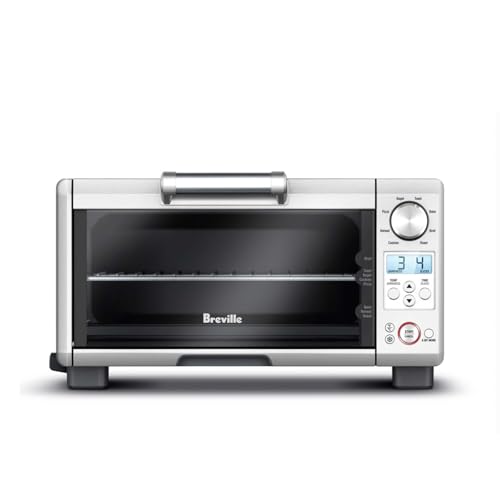
For cooks seeking the highest level of culinary precision and versatile smart cooking functions, we recommend the Breville BOV450XL Mini Smart Oven. Its Element iQ system and five quartz heating elements provide unmatched heat regulation for baking, broiling, and roasting. It operates like a miniature luxury range, making it our top overall selection for serious home chefs.
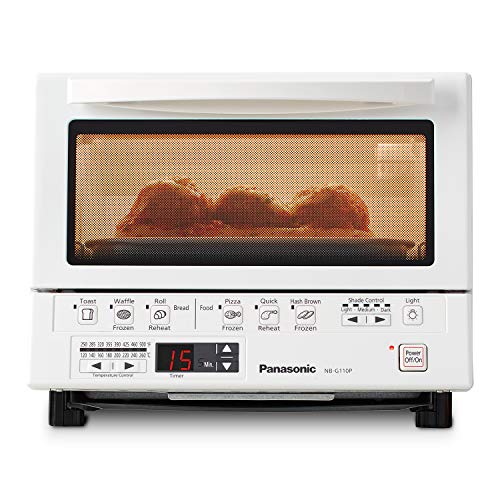
If your goal is lightning-fast breakfast preparation and effortless frozen food reheating, the Panasonic FlashXpress Toaster Oven Countertop is an outstanding compact specialist. The double infrared quartz and ceramic elements eliminate preheating entirely, crisping bread and snacks in record time. For those shopping on a strict budget or furnishing a compact dorm, the Elite Gourmet ETO449X Toaster Oven, 9.5Qt/4-Slice delivers essential quartz heating speed at tremendous overall value.
Whatever option you select, switching to quartz technology ensures you spend less time waiting for your oven to heat and more time enjoying delicious meals. Explore our curated kitchen upgrade roundups to discover additional high-performance tools designed to elevate your everyday culinary routine.
FAQs
How do quartz heating elements differ from traditional metal heating coils?
Quartz heating elements enclose resistance wire within high-purity silica glass tubes rather than thick metal sheaths. This design allows them to reach target temperatures in seconds, producing direct radiant infrared energy that browns food faster and eliminates lengthy preheat periods.
Do Best Toaster Ovens with Quartz Heating Elements require preheating before baking?
Most quartz models require virtually no preheating for toasting, broiling, or reheating tasks because the infrared elements illuminate immediately. For delicate baked items like cakes or cookies, a short two-minute preheat helps stabilize the ambient air inside the cooking chamber.
Can quartz heating elements crack or shatter easily during everyday use?
The silica glass tubes used in modern quartz ovens are engineered to withstand extreme thermal expansion and contraction without cracking. However, hitting the glass tubes with heavy ceramic bakeware can cause physical damage, which is why reputable manufacturers install protective metal safety guards.
What is the top-rated option among Best Toaster Ovens with Quartz Heating Elements in 2026?
The Breville BOV450XL Mini Smart Oven consistently stands out as the premier option due to its five independent quartz elements and smart temperature algorithms. It combines commercial-grade build quality with eight versatile cooking presets that easily replace standard kitchen ranges for everyday meal prep.
Are quartz toaster ovens more energy-efficient than standard full-size kitchen ovens?
Yes, quartz toaster ovens consume significantly less electricity because they heat up instantly and feature compact interior cavities. Heating a small countertop chamber takes a fraction of the power required to bring a large thirty-inch domestic oven to temperature.
Can you bake frozen pizzas in a compact quartz countertop oven?
Compact quartz countertop ovens excel at baking personal pizzas ranging from nine to eleven inches in diameter depending on the cavity width. The intense radiant heat crisps bottom crusts while melting cheese toppings evenly, preventing soggy crust issues often encountered in standard microwaves.
How do you clean the interior of a quartz toaster oven safely?
Always unplug the appliance and let it cool down completely before wiping interior walls with a damp microfiber cloth and mild dish soap. Never spray liquid cleaners directly onto the quartz glass tubes or scrub them with abrasive metal scouring pads.
Why does the quartz element turn on and off during baking cycles?
Quartz elements cycle on and off automatically as the internal thermostat maintains your chosen cooking temperature. Because quartz tubes emit visible orange light when energized, this normal cycling is simply more noticeable than with traditional metal calrod coils.
Can you use standard aluminum foil inside a quartz toaster oven?
You can use aluminum foil to cover baking pans, but you should never wrap the crumb tray or line the bottom chamber with foil. Trapped foil can cause severe overheating and may short-circuit the quartz heating tubes if it touches the electrical contacts.
How long do quartz heating elements typically last in a countertop appliance?
High-quality quartz heating elements are engineered to operate reliably for many years of daily cooking without losing heating efficiency. Regular cleaning and avoiding physical impacts to the glass tubes ensure the appliance provides long-lasting countertop performance. Check our detailed cooking appliance breakdowns for more maintenance tips.