
Outdoor play offers children essential physical exercise and creative development right outside your back door. Limited backyard square footage often makes parents think a full wooden playset is completely out of reach. Compact engineering now delivers multi-activity timber playgrounds designed specifically for modest residential lawns.
Finding the right balance between structural safety zones and compact dimensions prevents costly outdoor planning mistakes. Many homeowners struggle with bulky beams that dominate the yard and leave no room for garden landscaping. Exploring thoughtful home and living upgrades helps families make the most of every outdoor square foot.
Our analysis of 5 leading options for September 2026 focuses on real timber durability and space efficiency. We evaluate how top brands like KidKraft, Swing-N-Slide, Sportspower pack climbing walls, slides, and swings into small footprints. This guide helps you choose the perfect playset without sacrificing lawn space or child safety.



Footprint Dimensions and Safety Clearance Zones
Selecting a swing set for a modest yard begins with precise ground measurement. A compact playset typically requires an assembled footprint under fourteen feet long and eleven feet wide. Calculating your actual lawn space ensures the unit fits without encroaching on patio boundaries or perimeter fences.
The total footprint extends well beyond the wooden base itself because children need safe fall zones. Safety standards mandate at least six feet of obstacle-free clearance around all stationary sides of the playset. Swing clearance zones require double the height of the swing beam extending forward and backward during active use.
A reliable rule of thumb is to measure your clear yard space and subtract twelve feet from both length and width. That remaining dimension represents the maximum physical footprint your yard can safely accommodate. Choosing a narrow A-frame model helps preserve necessary perimeter clearance in tight properties.
Smart layout planning also involves inspecting overhead clearance for low-hanging tree branches and power cables. Compact play structures with peak roof heights around eight to nine feet fit neatly under standard suburban tree canopies. Measuring both vertical and horizontal planes guarantees safe installation on residential properties.
Wood Species and Weather-Resistant Pretreatments
The type of timber used in construction directly dictates the longevity and safety of your playground equipment. Cedar remains the gold standard for compact residential play structures due to natural rot resistance. Natural oils within cedar lumber repel wood-boring insects and resist moisture decay without harsh chemical treatments.
Factory pretreatments with water-based stains provide an essential first layer of defense against sun damage. Quality manufacturers apply factory stains that incorporate ultraviolet inhibitors and mold-resistant sealants. These protective coatings prevent immediate graying and reduce surface checking caused by rapid moisture evaporation.
Lumber density varies significantly across different price tiers and manufacturing standards. Dense wood construction resists bowing, splitting, and warping when exposed to heavy seasonal rain or direct summer sun. Selecting pre-treated, high-density cedar ensures structural components maintain their load-bearing capacity for years.
Homeowners should schedule an annual resealing routine with a clear water-repellent sealant to extend timber life. Applying sealant every spring prevents water absorption during winter thaw cycles and keeps splintering to a minimum. Proper maintenance ensures durable furniture and comfort solutions for your family across multiple seasons.
Play Activity Density and Multi-Feature Layouts
Activity density measures how many distinct play stations are engineered into a single compact footprint. The most effective small-yard models utilize vertical layering to provide multiple activities on two levels. A raised fort deck creates space for an integrated sandbox or picnic bench underneath.
Stacking play elements vertically maximizes entertainment value without expanding horizontal ground usage. Units that combine climbing ladders with rock wall grips give children diverse physical challenges in a single access point. Creative additions like chalk walls and shade canopies transform upper decks into imaginative play forts.
Look for playsets that feature balanced activity layouts catering to both active movement and quiet play. A set offering belt swings, a wave slide, and an open ground-level fort accommodates diverse play styles simultaneously. This structural efficiency keeps multiple siblings engaged without requiring an oversized playground frame.
When comparing configurations, assess whether the modular accessories align with your children’s current interests. Versatile sets with accessory hooks allow you to swap trapeze bars for bucket swings as toddlers grow. Multi-functional layouts guarantee that your small outdoor investment delivers continuous engagement over several years.
Weight Capacity and Multi-Child Accommodations
Weight capacity ratings indicate structural strength and dictate how many children can safely play together. Small-footprint playsets often support total weight capacities ranging from six hundred to eight hundred pounds. Individual swing stations typically carry user ratings between one hundred ten and one hundred fifty pounds.
Exceeding manufacturer weight thresholds introduces structural strain that can loosen hardware and warp timber supports. Reviewing total weight limits helps you determine if a set can handle neighbourhood playdates or growing siblings. Robust timber brackets and reinforced A-frames provide the structural integrity required for energetic group play.
A practical calculation involves adding the estimated weights of all potential users during peak play scenarios. If you expect four children averaging sixty pounds each to use the set, look for a five-hundred-pound minimum capacity. Choosing a set with generous capacity buffers ensures long-term safety as children mature.
Hardware Quality and Pinch-Free Safety Engineering
Structural fasteners and swing attachment hardware represent critical safety points that require careful evaluation. Premium play sets use corrosion-resistant galvanized steel bolts with recessed heads to prevent clothing snags. Heavy-duty iron swing hangers with enclosed bushings reduce friction squeaks and prevent metal fatigue.
Swing chain engineering plays a vital role in preventing painful pinch injuries during active swinging. Look for chains coated in heavy plastisol vinyl along the lower four feet where small hands grip. This flexible coating protects delicate fingers from pinching and resists rust caused by humid outdoor air.
Inspect corner brackets and gussets to ensure the timber joints stay rigid under continuous lateral movement. Dual A-frame support beams distribute mechanical force evenly across the base during heavy swing cycles. Solid triangular bracing prevents frame swaying and reduces fastener loosening over time.
Routine monthly hardware checks allow parents to tighten loose nuts and inspect coated chains for wear. Applying silicone spray lubricant to pivot hangers ensures smooth operation without attracting abrasive dirt particles. Quality hardware materials combined with regular maintenance deliver a safe and squeak-free backyard experience.
Deck Elevation and Slide Trajectory
Deck height directly governs slide length, climbing steepness, and the overall footprint required for safe exits. Compact playsets generally utilize deck heights between three and four feet above ground level. A lower deck height accommodates six-foot slides that require significantly less run-out space on your lawn.
An eight-foot slide requires approximately seven feet of straight clearance from the deck edge to the landing. High decks exceeding five feet demand longer slides that can quickly overwhelm a shallow backyard layout. Choosing a four-foot deck height provides exciting slide angles while conserving valuable horizontal lawn space.
Double-walled, blow-molded plastic slides offer superior impact strength and smoother rides than single-sheet plastic slides. Look for slides with raised side rails that guide children safely toward a flat exit deceleration zone. A well-engineered slide design prevents abrupt ground impacts while keeping the exit zone compact.
Ground Anchoring and Structural Stability
Anchoring your swing set firmly to the ground is a non-negotiable step for long-term safety and balance. Without secure anchors, energetic swinging can cause the corner legs to lift and tilt off the grass. Quality playset packages include a four-piece heavy-duty ground anchor kit designed for residential soils.
Auger-style screw anchors twist deep into the earth to create exceptional resistance against vertical uplift forces. For loose or sandy soil types, setting anchor posts in quick-drying concrete provides permanent structural stability. Stable anchoring prevents timber frame racking and keeps swings tracking straight during vigorous movement.
Check anchor tension every change of season as ground moisture and frost heave can shift soil density. Re-tightening anchor straps ensures the frame remains perfectly flush with the level ground surface. Solid ground contact prevents premature timber stress and maintains optimal stability for your backyard investment.
Assembly Complexity and Installation Time
Backyard playset kits require varying degrees of mechanical assembly and site preparation before use. Most compact wooden sets arrive with pre-cut, pre-drilled lumber and organized hardware packs to streamline construction. Two capable adults can typically assemble a compact wooden playset in four to eight hours.
Proper site preparation saves hours of frustration during the initial structural framing process. The installation site must be completely level before laying down the first timber base beams. Placing play structures on uneven slopes introduces uneven stress that can misalign pre-drilled bolt holes.
Sorting lumber pieces and matching hardware to the illustrated manual before beginning reduces assembly errors. Utilizing modern interactive app instructions provides three-dimensional visual guides for complex structural steps. Careful assembly ensures your compact playset meets manufacturer specifications and structural safety standards.
Small Yard Playset Specifications Comparison
| Playset Model | Assembled Dimensions | Slide Length | Key Features |
|---|---|---|---|
| Sportspower Grand Teton | 8.6 ft L x 9.2 ft W x 7.5 ft H | 6 Feet | Play Fort, Sandbox, 2 Belt Swings |
| Sportspower Rosemont | Compact Mid-Size Frame | 8 Feet | Rock Wall, Picnic Table, Chalk Tarp |
| KidKraft Appleton | Compact Space-Saver | 6 Feet | Tarp Canopy, Chalk Wall, Lower Sandbox |
| Swing-N-Slide PB 8360 Ranger | 8.7 ft L x 7.7 ft W x 6.8 ft H | Swing Only | Plastisol Chains, Trapeze, Compact Frame |
| Sportspower 8-in-1 Lakeview | 13 ft L x 10.8 ft W x 9 ft H | 8 Feet | Play Kitchen, 2 Swings, Trapeze, Bench |
Comparing these structural specifications allows you to choose an option tailored to your available lawn measurements. Evaluating dimensions alongside included play features ensures every square foot delivers maximum physical fun. Review our comprehensive all reviews directory to find more outdoor equipment comparisons for your home.
Why You Should Trust Us
Our review team evaluates backyard play equipment by examining verified structural engineering data and material specifications. We analyze timber species, load-bearing capacities, hardware coatings, and certified ASTM safety compliance across every model. This rigorous data-driven methodology eliminates guesswork so families can make informed property investments.
We cross-reference dimensional measurements with residential safety clearance requirements to identify genuinely compact options. Our analysis tracks long-term weather resistance, factory warranties, and assembly feedback from real homeowners. We maintain strict editorial objectivity by focusing purely on structural design, build quality, and overall value.
Our buying guides receive regular updates as manufacturers revise timber treatments, hardware packs, and accessory configurations. We monitor consumer safety advisories and standards updates to keep our structural recommendations accurate and practical. Our priority is helping you build a fun, durable, and safe play space for your children.
Final Thoughts
Investing in a compact playset turns modest outdoor areas into vibrant centers for physical exercise and creative roleplay. Choosing the right design depends on balancing your children’s age profile with available lawn dimensions. Selecting durable cedar ensures your backyard playground withstands harsh outdoor elements year after year.
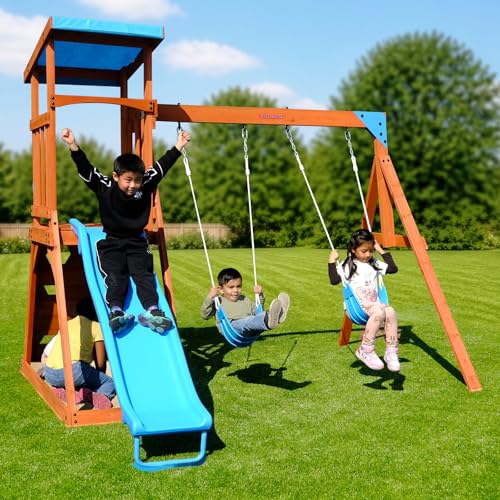
For families seeking the ultimate balance of features and space conservation, the Sportspower Grand Teton Cedar Wooden Swing Set is our top overall recommendation. Its ultra-compact footprint houses two belt swings, a sturdy slide, a sandbox, and an elevated fort. This smart design delivers high activity density without demanding an oversized clearance zone.
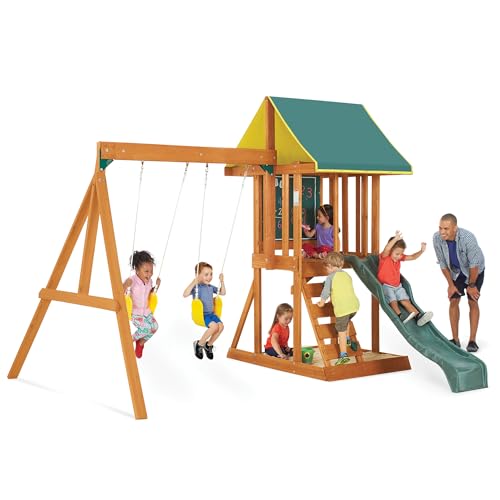
If you want pure swinging fun in the tightest available space, consider the Swing-N-Slide PB 8360 Ranger Wooden Swing Set as the best value pick. It focuses entirely on heavy-duty swing stations with pinch-free coated chains that fit easily into narrow yard corridors. For multi-activity imaginative play with creative chalk areas, the KidKraft Appleton Wooden Swing Set serves as a fantastic specialized pick.
For yards with slightly more horizontal space that need maximum group accommodation, the Sportspower 8-in-1 Lakeview Outdoor Cedar Wooden and the Sportspower Rosemont Cedar Wooden Swing Set offer exceptional multi-station fun. Investing in reliable outdoor play structures supports active childhood development while enhancing your home lifestyle. Explore our guides on health and family essentials for additional household recommendations.
FAQs
What is the top-rated option among Best Wooden Swing Sets for Small Yards in 2026?
The top-rated model in our 2026 comparison is the Sportspower Grand Teton Cedar Wooden Swing Set. It combines two belt swings, an elevated play fort, and a slide into an efficient footprint under nine feet wide. Its durable cedar construction and included ground anchors offer outstanding structural safety in compact yards.
How much safety clearance is required around a small wooden swing set?
Safety guidelines recommend maintaining at least six feet of open space around all stationary sides of the playset frame. The swing zone requires additional clearance equal to twice the height of the swing beam both forward and backward. Maintaining these clear buffer zones prevents collisions with trees, fences, and outdoor patio furniture.
How do I prepare a small yard before assembling a wooden swing set?
Start by clearing all rocks, debris, and low tree branches from the intended installation perimeter. Use a level tool to identify ground slopes and level the installation zone using soil grading or paver blocks. Laying down weed barrier fabric and shock-absorbing protective mulch completes an ideal safety foundation.
Are cedar wooden swing sets resistant to weather and insect damage?
Cedar naturally contains aromatic oils that repel wood-boring insects and inhibit mold and rot growth. Pre-treated factory stains provide additional protection against sun fading, surface moisture, and harsh seasonal temperature swings. Applying a clear water-repellent sealant annually keeps your cedar playset looking vibrant and structurally sound.
Can two adults assemble a compact wooden playset in a single weekend?
Most compact playsets are designed for straightforward assembly by two adults in four to eight hours. Having pre-drilled holes, organized hardware packs, and an electric driver significantly speeds up the construction process. Following the manufacturer’s illustrated steps carefully ensures a smooth installation experience over a single weekend.
What ground surfacing is recommended underneath backyard playsets?
Engineered wood fiber mulch, rubber mulch, or poured rubber surfacing provide superior shock absorption compared to bare turf. A six-inch depth of safety mulch cushions accidental falls and prevents muddy wear spots under swings and slide exits. Proper safety surfacing complements protective child equipment like convertible child gear designed for daily family security.
Why are plastisol-coated swing chains important on children’s playsets?
Plastisol vinyl coatings encase the lower links of metal chains to eliminate painful finger pinching during active use. The coating also insulates the metal against extreme outdoor temperatures so chains do not become hot in direct sunlight. Furthermore, heavy vinyl prevents chain rust and extends the working life of the swing assembly.
How many children can play on a compact swing set simultaneously?
Compact multi-feature playsets are typically engineered to accommodate four to eight children at the same time. Total weight capacities generally range from six hundred to eight hundred pounds across the entire wooden structure. Always check individual station weight ratings to ensure safe distribution of children across swings and decks.
Is ground anchoring mandatory for compact wooden swing sets?
Ground anchoring is essential for all residential swing sets regardless of their compact size or overall frame weight. Anchoring prevents the A-frame legs from shifting or lifting off the lawn during high-energy swinging cycles. Using heavy-duty ground auger anchors guarantees stability and prevents structural racking over time.
Can I replace standard belt swings with toddler bucket swings?
Most wooden playsets utilize standard snap-hook carabiner hangers that make swapping swing accessories quick and simple. You can easily remove a standard sling swing and attach a high-back toddler bucket seat in seconds. This modular flexibility allows the playset to adapt smoothly as your children grow through different stages.